
The legal industry has fundamentally transformed over the past decade, with prospective clients now searching for attorneys online before making any contact. For law firms competing in 2026, digital marketing for law firms is not optional-it represents the primary channel through which potential clients discover, evaluate, and ultimately choose legal representation. Whether you practice family law, personal injury, corporate law, or criminal defense, your digital presence directly impacts your firm's growth trajectory and client acquisition costs.
Understanding the Legal Client Journey
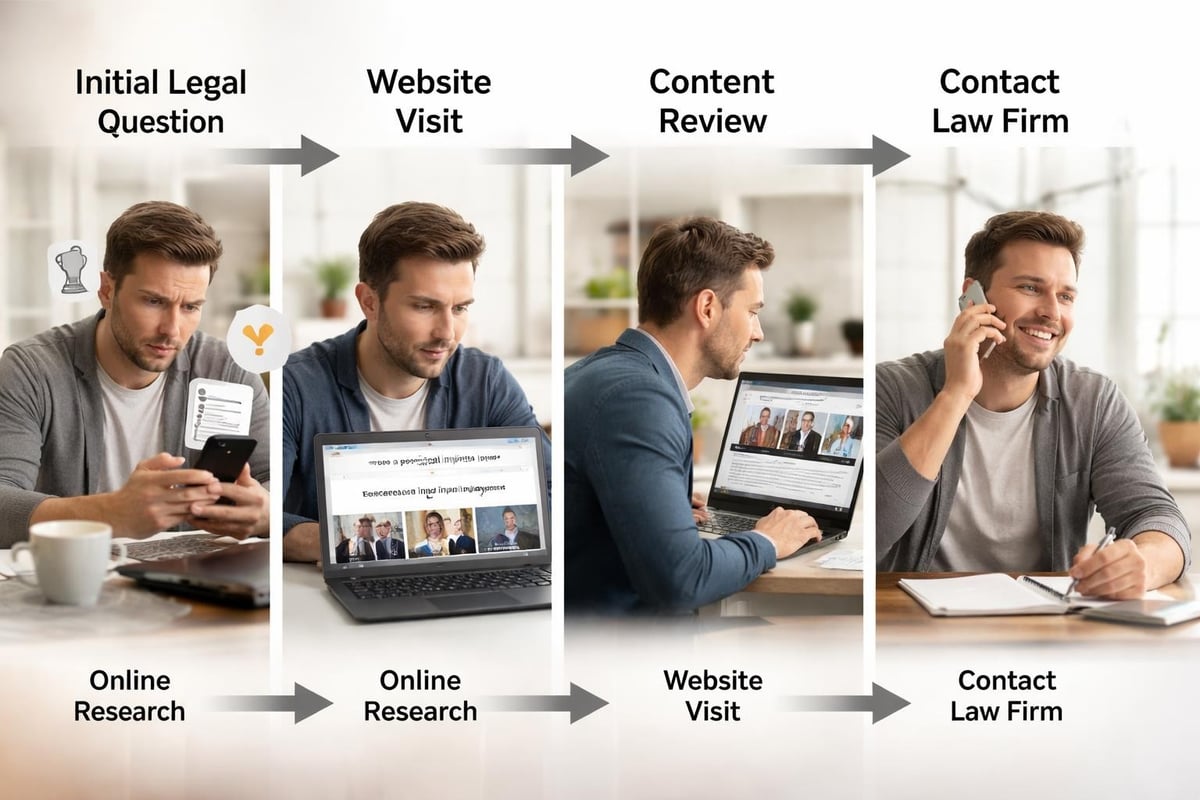
The modern legal client begins their search for representation long before they pick up the phone. They start with search engines, review sites, and social media platforms to research their options and evaluate credibility. This behavior shift requires law firms to meet potential clients where they are, with compelling content that addresses their concerns and establishes trust.
Digital touchpoints in the legal client journey include:
- Initial search queries on Google or Bing
- Review of law firm websites and service pages
- Reading client testimonials and case results
- Consuming educational content like blog posts and videos
- Engaging with social media presence
- Comparing multiple firms before making contact
Understanding this journey allows firms to create strategic touchpoints that guide prospects from awareness through consideration to decision. The firms that excel at digital marketing for law firms recognize that each interaction builds credibility and moves potential clients closer to engagement.
Why Traditional Marketing Falls Short
Traditional marketing methods like Yellow Pages ads, billboards, and television commercials still have their place, but they lack the targeting precision and measurability that digital channels provide. More importantly, they don't align with how people actually search for legal services today. When someone faces a legal challenge, their first instinct is to search online for answers, not to flip through a phone book or wait for a commercial to air.
Digital marketing for law firms offers advantages that traditional methods simply cannot match. You can target specific practice areas, geographic regions, and even demographic profiles. You can measure exactly how many people viewed your content, clicked through to your website, and submitted contact forms. This data-driven approach allows for continuous optimization and better return on investment.
Search Engine Optimization for Legal Practices
Search engine optimization remains the cornerstone of effective digital marketing for law firms. When executed properly, SEO positions your firm at the top of search results for the exact queries your ideal clients are typing into Google. This visibility translates directly into qualified leads and new cases.
Local SEO Fundamentals
Most legal services are location-specific, making local SEO critical for law firms. Your Google Business Profile serves as your digital storefront, appearing in local map results when potential clients search for attorneys in your area. Optimizing this profile with accurate information, client reviews, and regular updates significantly improves your local visibility.
Essential local SEO elements include:
- Verified and optimized Google Business Profile
- Consistent NAP (Name, Address, Phone) across all directories
- Location-specific service pages on your website
- Client reviews on Google and legal directories
- Local backlinks from community organizations and chambers of commerce
Geographic targeting combined with practice area specificity creates a powerful positioning strategy. Rather than competing nationally for "personal injury attorney," you target "personal injury attorney in [your city]," where competition is more manageable and intent is higher.
Content-Driven SEO Strategy
The crucial digital marketing strategies that drive organic traffic center on creating valuable content that answers client questions. Search engines reward websites that provide comprehensive, authoritative information on specific legal topics. By publishing detailed guides, FAQs, and case study examples, you establish topical authority while naturally incorporating keywords relevant to your practice.
| SEO Content Type | Purpose | Frequency |
|---|---|---|
| Practice Area Pages | Service descriptions and value proposition | Static, updated quarterly |
| Blog Articles | Answer common questions, build authority | 2-4 per month |
| Case Studies | Demonstrate results and expertise | Monthly |
| FAQ Pages | Address specific client concerns | Expand ongoing |
| Attorney Bios | Build personal connection and credentials | Static, updated annually |
This strategic approach to content creation supports both search visibility and client education. When combined with thoughtful branding strategy, your content becomes a differentiator that sets your firm apart from competitors who rely solely on templated website content.
Website Development and User Experience
Your website serves as the hub of all digital marketing for law firms efforts. Every social media post, paid advertisement, and search result should ultimately drive traffic to a website designed to convert visitors into clients. Poor website design undermines even the most sophisticated marketing campaigns.
Conversion-Focused Design Elements
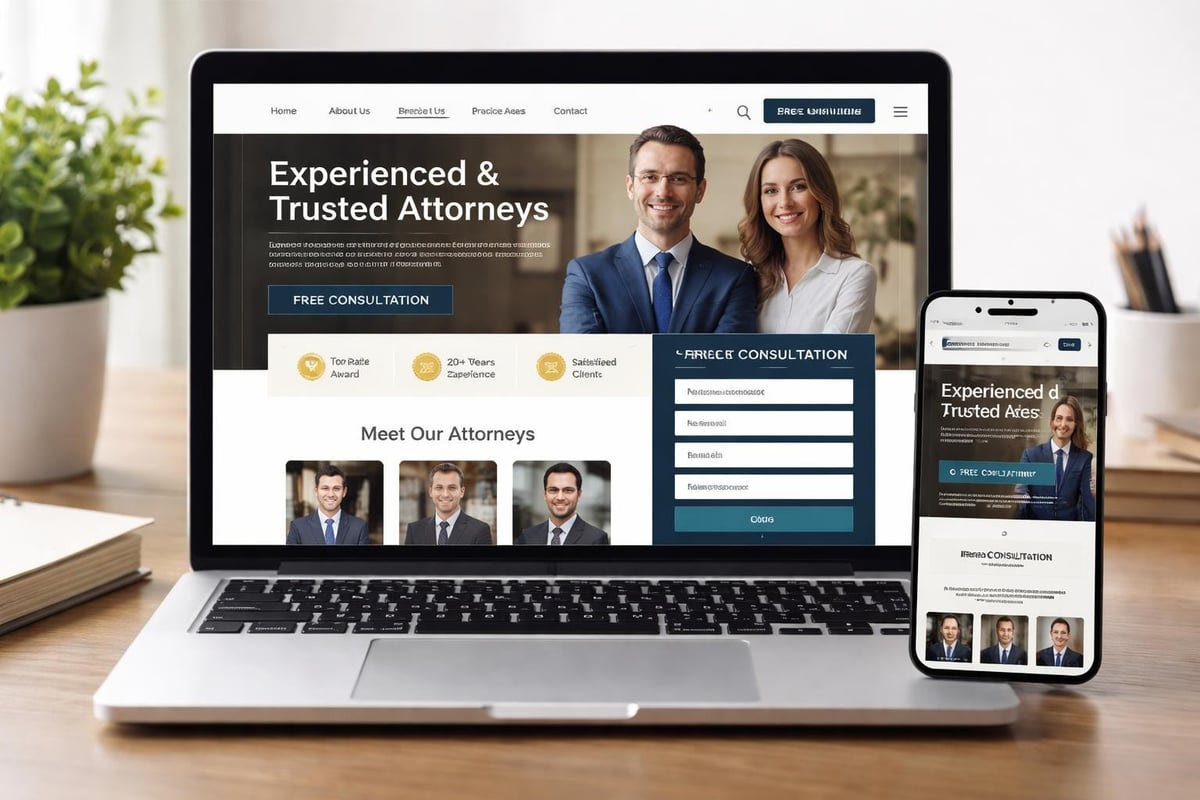
Legal websites must balance professionalism with accessibility. Potential clients are often stressed, confused, or intimidated by legal processes. Your website should reduce anxiety while guiding visitors toward contact. Clear calls-to-action, prominent phone numbers, and simple contact forms remove friction from the engagement process.
High-converting law firm websites feature:
- Mobile-responsive design that works perfectly on all devices
- Fast loading speeds (under 3 seconds)
- Clear value propositions on every page
- Trust signals like badges, certifications, and awards
- Prominent contact information and CTAs
- Live chat or chatbot functionality
- Video introductions from attorneys
The psychological principle of reducing decision fatigue applies directly to website design. When visitors can easily find information and understand their next steps, conversion rates improve dramatically. Avoiding common mistakes in web design ensures your investment in traffic generation translates into actual inquiries.
Trust Building Through Design
Legal services require significant trust before engagement. Potential clients are sharing sensitive information and often face significant financial or personal consequences. Your website design must communicate competence, credibility, and empathy simultaneously.
Professional photography of your actual attorneys and office creates authenticity that stock photos cannot replicate. Client testimonials with real names and photos (with permission) provide social proof. Case results, when ethically presented with appropriate disclaimers, demonstrate capability. These elements work together to build the confidence necessary for a prospective client to make initial contact.
Content Marketing That Demonstrates Expertise
Beyond SEO benefits, content marketing establishes your firm as a thought leader in your practice areas. When potential clients read your articles, watch your videos, or download your guides, they develop familiarity with your approach and expertise before ever speaking with you. This pre-established relationship significantly shortens the sales cycle.
Educational Content Strategy
The most effective digital marketing strategies for lawyers prioritize education over promotion. Potential clients searching for legal information are not yet ready to hire an attorney. They want to understand their situation, explore their options, and learn about the legal process. Content that serves these needs builds trust while capturing early-stage leads.
- Identify common client questions across your practice areas
- Create comprehensive answers in blog posts, videos, or downloadable guides
- Organize content by topic to demonstrate depth of knowledge
- Update regularly to reflect current laws and precedents
- Promote through social media and email newsletters
This approach transforms your website into a resource destination. When someone researches "what to do after a car accident" or "how to file for divorce," your content can appear in search results, introducing your firm early in their decision process.
Multi-Format Content Distribution
Different people consume information in different formats. Some prefer reading detailed articles, while others want quick video explanations or audio content they can consume during their commute. Successful digital marketing for law firms embraces multiple content formats to reach broader audiences.
| Content Format | Best Use Case | Production Frequency |
|---|---|---|
| Long-form Blog Posts | Complex legal topics, SEO | Weekly |
| Short Videos | Quick tips, attorney introductions | Bi-weekly |
| Infographics | Process explanations, statistics | Monthly |
| Podcasts | In-depth discussions, interviews | Weekly or bi-weekly |
| Downloadable Guides | Lead magnets, comprehensive resources | Quarterly |
Repurposing content across formats maximizes your investment. A single comprehensive blog post can become a video script, podcast episode, social media series, and downloadable PDF. This approach maintains consistent messaging while expanding reach.
Paid Advertising for Immediate Visibility
While organic strategies build long-term value, paid advertising provides immediate visibility for competitive practice areas. Google Ads, social media advertising, and display campaigns complement SEO efforts by capturing high-intent searchers who are ready to hire an attorney now.
Google Ads for Legal Services
Pay-per-click advertising on Google places your firm at the top of search results for your target keywords. For competitive practice areas like personal injury or DUI defense, paid ads often represent the only way to appear on the first page immediately. The key is structuring campaigns to maximize quality while managing costs.
Effective Google Ads strategies include:
- Highly specific keyword targeting based on practice areas
- Geographic targeting to your service area only
- Negative keywords to exclude irrelevant searches
- Landing pages designed specifically for ad traffic
- Call extensions for mobile searchers
- Conversion tracking to measure ROI
The essential digital marketing strategies for law firms emphasize the importance of aligning ad messaging with landing page content. When someone clicks an ad about personal injury claims, they should arrive at a page specifically about personal injury services, not a generic homepage.

Social Media Advertising Considerations
Social media platforms like Facebook, LinkedIn, and Instagram offer targeting capabilities based on demographics, interests, and behaviors. While social media users may not be actively searching for legal services, these platforms excel at building brand awareness and capturing early-stage interest.
LinkedIn advertising works particularly well for corporate law, business litigation, and B2B legal services. Facebook and Instagram reach individuals facing family law matters, estate planning needs, or personal injury situations. The key is matching platform demographics with your ideal client profiles.
Social Media Presence and Engagement
Social media serves multiple purposes in digital marketing for law firms. It builds brand awareness, demonstrates personality and values, distributes content, and maintains relationships with past clients who may provide referrals. Each platform offers unique advantages depending on your practice areas and target audience.
Platform Selection and Strategy
Rather than attempting to maintain presence on every social platform, successful firms focus on the channels where their ideal clients actually spend time. A family law practice might prioritize Facebook and Instagram, while a corporate litigation firm focuses on LinkedIn. This focused approach allows for higher quality content and engagement.
The principles of effective social media marketing apply directly to legal practices. Consistency matters more than frequency. Authenticity builds stronger connections than polished perfection. Engagement with followers creates community and loyalty.
Platform-specific approaches include:
- LinkedIn: Thought leadership articles, firm news, professional insights
- Facebook: Client success stories, community involvement, educational videos
- Instagram: Behind-the-scenes content, team culture, visual storytelling
- Twitter: Legal news commentary, quick tips, industry discussions
- YouTube: Educational videos, client testimonials, attorney introductions
Building Authentic Connections
The legal industry often suffers from perceptions of being impersonal or transactional. Social media provides opportunities to showcase the human side of your practice. Introducing team members, sharing firm culture, celebrating client successes (with permission), and participating in community events all contribute to building authentic connections.
This approach aligns with creating brands that connect emotionally while maintaining professional credibility. Potential clients want to work with attorneys they like and trust, not just those with impressive credentials. Social media allows your firm's personality and values to shine through.
Email Marketing for Client Retention
While much of digital marketing for law firms focuses on acquisition, retention marketing through email nurtures existing relationships and generates referrals. Past clients represent your most valuable marketing asset. They already trust you, understand your value, and can refer friends and family facing similar legal needs.
Newsletter Strategy and Content
Regular email newsletters keep your firm top-of-mind without being intrusive. Unlike social media, where algorithms determine who sees your content, email delivers directly to subscriber inboxes. The key is providing value rather than constant promotion.
Effective newsletter content includes legal updates affecting your audience, answers to common questions, firm news and achievements, and relevant resources. Segmenting your list by practice area allows for more targeted, relevant content. Someone who hired you for estate planning receives different content than a personal injury client.
Automation and Follow-Up Sequences
Email automation enables personalized communication at scale. New contact inquiry sequences, post-consultation follow-ups, case milestone updates, and post-case feedback requests can all be automated while maintaining personalization. Using tools like Mailchimp streamlines this process and provides metrics to optimize performance.
| Email Sequence Type | Purpose | Typical Length |
|---|---|---|
| New Inquiry Follow-Up | Nurture leads who haven't hired yet | 5-7 emails over 2 weeks |
| Client Onboarding | Set expectations and provide resources | 3-4 emails over first month |
| Case Updates | Keep clients informed of progress | As needed throughout case |
| Post-Case Follow-Up | Request reviews and referrals | 3 emails over 6 months |
This systematic approach ensures no opportunities fall through the cracks while building stronger client relationships.
Reputation Management and Reviews
Online reviews have become a primary factor in attorney selection. Potential clients read reviews on Google, Avvo, Martindale-Hubbell, and other legal directories before making contact. Managing your online reputation is not optional in 2026-it directly impacts lead volume and quality.
Strategic Review Generation
The best time to request a review is immediately after delivering value, typically at case resolution. Satisfied clients are usually happy to share their experience if asked directly and given clear instructions. Implementing a systematic review request process ensures consistent generation of new testimonials.
Review generation best practices:
- Ask at the optimal moment (post-case resolution)
- Provide direct links to your preferred review platforms
- Make the process as simple as possible
- Follow up once if initial request is ignored
- Thank reviewers publicly for their feedback
- Never incentivize reviews with compensation
Responding to all reviews, both positive and negative, demonstrates engagement and professionalism. Thoughtful responses to negative reviews can actually improve perception by showing how you handle conflicts and criticism.
Multi-Platform Presence
While Google reviews carry the most weight for local search, maintaining profiles on legal-specific directories builds credibility and captures traffic from multiple sources. Avvo, Lawyers.com, Justia, and FindLaw all drive traffic to law firms with complete, optimized profiles.
Consistency across platforms matters. Your firm name, address, phone number, practice areas, and messaging should match everywhere your firm appears online. This consistency signals legitimacy to both search engines and potential clients.
Analytics and Performance Measurement
The advantage of digital marketing for law firms over traditional marketing lies in measurability. Every website visit, form submission, phone call, and email can be tracked back to its source. This data enables continuous optimization and intelligent budget allocation.
Key Performance Indicators
Tracking the right metrics focuses efforts on activities that actually drive results. Vanity metrics like social media followers or website traffic matter less than conversion metrics like consultation requests, phone calls, and signed retainer agreements.
Critical metrics to monitor include:
- Website traffic sources: Organic, paid, direct, referral, social
- Conversion rate: Percentage of visitors who contact you
- Cost per lead: Total marketing spend divided by leads generated
- Lead to client conversion: Percentage of inquiries that become clients
- Client acquisition cost: Total cost to acquire one new client
- Lifetime client value: Average revenue per client relationship
Understanding these metrics allows for strategic decision-making. If social media drives high traffic but low conversions, you might reduce investment there. If Google Ads delivers expensive leads but high conversion rates, increasing budget makes sense.
Attribution and ROI Tracking
Modern attribution tools track the complete client journey from first touch through conversion. Someone might discover your firm through a blog post, return via a Google search, and finally convert after seeing a Facebook ad. Understanding this path allows proper credit allocation and budget optimization.
Tools like Google Analytics 4, call tracking software, and CRM systems provide the infrastructure for comprehensive tracking. The timeless digital marketing strategies that deliver consistent results all emphasize data-driven decision making over guesswork.
Brand Differentiation in a Crowded Market
Hundreds or thousands of attorneys compete in most metropolitan markets. Digital marketing for law firms succeeds when it communicates clear differentiation. Why should someone choose your firm over equally qualified competitors? The answer cannot be "we're experienced and professional"-everyone claims that.
Developing Your Unique Value Proposition
Your unique value proposition articulates the specific benefit clients receive from working with your firm that they cannot get elsewhere. This might be a specialized niche focus, a particular approach to client communication, innovative fee structures, or demonstrable results in specific case types.
The process of designing your brand involves identifying what makes your firm genuinely different and expressing that difference consistently across all marketing channels. Generic messaging blends into the background. Specific, authentic positioning captures attention.
- Identify your ideal client with extreme specificity
- Understand their priorities beyond just legal expertise
- Assess your genuine strengths compared to competitors
- Articulate the intersection of client needs and your capabilities
- Express this positioning consistently in all messaging
This strategic clarity informs every marketing decision, from website copy to social media content to advertising messages. When your positioning resonates with your ideal client profile, marketing becomes dramatically more efficient.
Visual Identity and Brand Consistency
Your visual identity-logo, colors, typography, imagery style-communicates professionalism and personality before anyone reads a word of your content. Inconsistent branding across touchpoints creates confusion and erodes trust. Understanding brand colors and their psychological impact helps create intentional first impressions.
Professional photography, cohesive design elements, and consistent voice across all channels signal that your firm pays attention to details. If your marketing materials appear disjointed or amateur, potential clients may question whether you'll be equally careless with their legal matters.
Integration and Consistency Across Channels
The most effective digital marketing for law firms recognizes that no single channel works in isolation. Your SEO efforts drive traffic to your website. Your social media builds awareness that increases branded search volume. Your email marketing generates reviews that improve local SEO. Your paid ads capture immediate demand while organic strategies build long-term assets.
Creating a Cohesive Strategy
Rather than treating each channel as a separate initiative, successful firms develop integrated strategies where each element supports the others. Content created for SEO gets promoted through social media and email. Paid advertising tests messaging that informs organic content creation. Client success stories appear on websites, in social posts, and in email newsletters.
This integrated approach maximizes efficiency while creating consistent brand experiences. A prospective client might encounter your firm through multiple touchpoints before making contact. Each interaction should reinforce the same positioning, values, and messaging.
Integration points include:
- Using blog content as email newsletter material
- Promoting new website pages through social media
- Converting popular blog posts into video content
- Featuring client reviews across all platforms
- Maintaining consistent messaging across paid and organic channels
The Role of Strategic Partnership
Many law firms lack the internal expertise or bandwidth to execute comprehensive digital marketing strategies. Partnering with agencies that understand both marketing fundamentals and legal industry specifics fills this gap. The right partner brings fresh perspective, specialized skills, and accountability for results.
When evaluating potential partners, look beyond technical capabilities to strategic thinking. Marketing strategy requires understanding client psychology, competitive positioning, and brand development-not just execution tactics. The best partnerships blend the firm's legal expertise and client knowledge with the agency's marketing mastery.
Digital marketing for law firms in 2026 requires strategic integration of multiple channels, consistent brand messaging, and commitment to providing genuine value before asking for business. The firms that thrive combine technical execution with emotional connection, creating client experiences that begin long before the first consultation. If you're ready to build a legal brand that connects authentically with your ideal clients while driving measurable growth, New Love Marketing & Design brings psychology-based strategy and The M Method framework to create marketing that performs with purpose.