
In an increasingly competitive global marketplace, cities, regions, and neighborhoods are no longer relying solely on geographic advantages or historical reputation to attract residents, tourists, and businesses. They are actively shaping their identities through strategic marketing efforts. Place branding has emerged as a sophisticated discipline that applies traditional branding principles to geographic locations, creating distinctive identities that resonate emotionally with target audiences while driving measurable economic outcomes. This approach transforms how communities present themselves to the world, leveraging psychology, design, and strategic messaging to build lasting connections.
Understanding the Foundations of Place Branding
Place branding represents the strategic process of developing and managing the reputation and perception of a specific location. Unlike traditional product branding, this practice involves multiple stakeholders, complex historical narratives, and the challenge of representing diverse communities under a unified vision.
The concept extends beyond simple tourism marketing or economic development campaigns. It encompasses the entire ecosystem of how a place is perceived, experienced, and remembered. Place branding initiatives integrate visual identity systems, messaging frameworks, experiential touchpoints, and stakeholder engagement to create cohesive brand narratives.
Core Components That Define Successful Place Brands
Effective place branding requires several interconnected elements working in harmony:
- Authentic Identity: The brand must reflect genuine characteristics, history, and values of the location rather than manufactured narratives
- Stakeholder Alignment: Residents, businesses, government entities, and community organizations must share a common vision
- Visual Consistency: Design elements, color palettes, and typography create immediate recognition across all touchpoints
- Emotional Resonance: Stories and experiences that connect with target audiences on a psychological level
- Measurable Outcomes: Clear metrics for tourism growth, investment attraction, or resident satisfaction
The relationship between brand credibility and consumer behavior demonstrates that trustworthiness forms the foundation of successful place attachment. When communities present authentic narratives supported by tangible experiences, they build loyalty that transcends transactional relationships.

The Psychology Behind Emotional Place Connections
Human beings form deep emotional bonds with places that extend far beyond rational decision-making processes. These connections influence where people choose to live, visit, invest, and recommend to others. Understanding this psychological dimension separates superficial marketing campaigns from transformative branding strategies.
Much like the secret ingredient to any brand centers on emotional authenticity, place branding succeeds when it taps into universal human needs for belonging, identity, and meaning. Cities that position themselves as innovation hubs attract entrepreneurs seeking community. Neighborhoods emphasizing family-friendly environments draw parents prioritizing safety and education.
Crafting Narratives That Resonate
The most compelling place brands tell stories that audiences can see themselves within. These narratives address specific aspirations, challenges, and values:
- Heritage storytelling connects past achievements to future possibilities
- Innovation positioning highlights forward-thinking communities embracing change
- Quality of life messaging emphasizes lifestyle benefits and cultural richness
- Economic opportunity framing showcases growth potential and business advantages
- Sustainability commitment demonstrates environmental and social responsibility
Each narrative approach requires different design languages, messaging tones, and engagement strategies. The key lies in selecting frameworks that align authentically with the place’s genuine characteristics while appealing to target audience motivations.
Strategic Applications Across Different Contexts
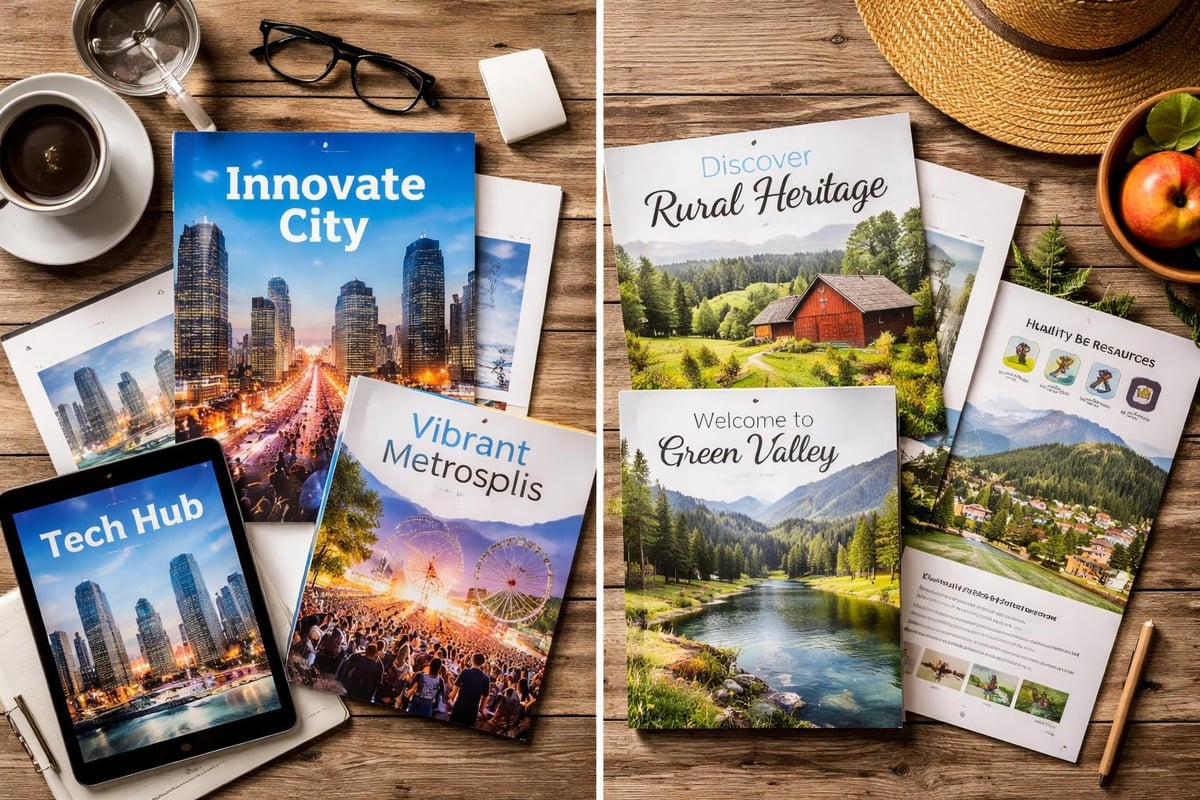
Place branding manifests differently depending on geographic scope, audience objectives, and community characteristics. The strategic approach for a rural region differs substantially from a metropolitan downtown district or an emerging technology corridor.
Urban Centers and Metropolitan Regions
Large cities typically pursue place branding to compete for talent, investment, and international recognition. Their strategies often emphasize:
- Cultural vibrancy and arts scenes
- Economic diversity and job opportunities
- Infrastructure quality and connectivity
- Innovation ecosystems and startup support
Research on place branding’s impact on high-technology sectors reveals how cities leverage brand dimensions to attract knowledge-based industries. Successful technology hubs create identities around innovation, collaboration, and entrepreneurial energy that become self-fulfilling prophecies.
Rural Communities and Regional Development
Rural development through place branding presents unique opportunities and challenges. These communities often position themselves around:
| Brand Focus | Target Audience | Key Messages |
|---|---|---|
| Agricultural heritage | Food enthusiasts, eco-tourists | Authentic farm-to-table experiences, sustainable practices |
| Natural beauty | Outdoor recreation seekers | Adventure opportunities, environmental preservation |
| Artisan traditions | Cultural tourists, craft collectors | Handmade quality, traditional skills, unique products |
| Small-town values | Remote workers, retirees | Affordable living, tight-knit community, slower pace |
These positioning strategies work when supported by infrastructure investments, business development programs, and resident engagement initiatives that bring brand promises to life.
Neighborhood and District Branding
Within larger cities, individual neighborhoods increasingly develop distinct brand identities. This micro-level branding helps communities attract specific demographics, support local businesses, and preserve unique character amid urban development pressures.
Neighborhood branding typically involves:
- Street art and public installations reflecting community values
- Local business associations coordinating visual identity
- Events and festivals celebrating neighborhood culture
- Social media campaigns highlighting resident stories
- Wayfinding systems and signage creating cohesive environments
The principles that guide creating a premium brand apply equally to neighborhoods seeking to position themselves as desirable destinations. Consistency, quality execution, and authentic differentiation separate successful initiatives from superficial rebranding attempts.
Design Elements That Bring Place Brands to Life
Visual identity systems form the tangible expression of place branding strategies. These design frameworks extend across physical and digital environments, creating consistent experiences that reinforce brand positioning.
Building Comprehensive Visual Systems
Effective place brand design encompasses multiple interconnected elements:
- Logo and wordmark serving as the primary identifier
- Color palette evoking emotional responses and ensuring recognition
- Typography establishing tone and personality
- Photography style showcasing authentic experiences and diverse perspectives
- Iconography communicating key attributes through simplified graphics
- Patterns and textures adding depth and cultural reference
Understanding the secret behind brand colors becomes particularly important when designing for places, as color associations vary across cultures and demographics. The psychology of color influences how audiences perceive energy levels, trustworthiness, and innovation capacity.
Digital Touchpoints and User Experience
In 2026, digital presence forms the primary introduction most people have to a place. Website design, social media aesthetics, and digital campaigns must align seamlessly with physical brand expressions.
Common challenges include:
- Balancing diverse stakeholder needs within unified design systems
- Maintaining consistency across government, business, and nonprofit applications
- Avoiding common mistakes in web design that undermine brand credibility
- Ensuring accessibility for all users regardless of ability or device
- Increasing time users spend engaging with digital content
Strategic digital marketing requires understanding how audiences discover, evaluate, and form opinions about places online. Search optimization, content marketing, and social proof all contribute to building compelling digital narratives.

Measuring Impact and Refining Strategies
Place branding initiatives require significant investments of time, resources, and political capital. Demonstrating return on investment through measurable outcomes ensures continued support and enables strategic refinement.
Key Performance Indicators for Place Brands
Different objectives require different measurement approaches:
| Objective | Primary Metrics | Secondary Indicators |
|---|---|---|
| Tourism growth | Visitor numbers, hotel occupancy rates | Average length of stay, per-visitor spending |
| Business attraction | New company registrations, job creation | Commercial real estate absorption, startup formation |
| Resident retention | Population stability, migration patterns | Housing demand, school enrollment trends |
| Investment attraction | Capital inflows, development permits | Property values, infrastructure improvements |
| Reputation enhancement | Brand awareness surveys, media mentions | Social media sentiment, recommendation rates |
The intersection of place branding and public policy raises important questions about accountability and measurement. When public funds support branding initiatives, transparent reporting on outcomes becomes essential for maintaining stakeholder trust.
Continuous Evolution and Adaptation
Successful place brands evolve alongside community changes, economic shifts, and audience expectations. Static identities become outdated, while overly frequent changes create confusion and erode recognition.
Best practices for brand evolution include:
- Annual stakeholder surveys assessing brand perception
- Competitive analysis monitoring how comparable places position themselves
- Environmental scanning identifying emerging trends and opportunities
- Periodic design refreshes maintaining core identity while updating execution
- Testing new messaging approaches before full-scale implementation
The lessons shared in place marketing and branding insights emphasize learning from both successes and failures. Experimentation, measurement, and refinement create stronger strategies over time.
Implementing Place Branding Through Collaborative Processes
The complexity of place branding demands inclusive processes that engage diverse stakeholders from conception through execution. Top-down initiatives lacking community buy-in typically fail to achieve lasting impact.
Building Stakeholder Consensus
Successful implementation begins with identifying and engaging key stakeholders:
- Government officials who control resources and policy decisions
- Business leaders who invest in the community and employ residents
- Nonprofit organizations serving specific populations and missions
- Residents who embody the community and share its story
- Creative professionals bringing design expertise and strategic thinking
Workshop facilitation, survey research, and community forums create opportunities for stakeholder input. The challenge lies in synthesizing diverse perspectives into coherent strategies that satisfy multiple constituencies while maintaining strategic focus.
Phased Rollout and Activation
Rather than launching complete rebrands overnight, effective place branding unfolds through strategic phases:
- Research and strategy development establishing brand positioning and visual direction
- Identity design and testing creating visual systems and validating with stakeholders
- Pilot implementation applying the brand to limited touchpoints and measuring response
- Expanded rollout systematically updating signage, digital properties, and collateral
- Activation programming launching events, campaigns, and experiences that bring the brand to life
- Ongoing management maintaining consistency while enabling appropriate flexibility
This phased approach allows for learning, adjustment, and building momentum rather than risking rejection through premature full-scale implementation.
The Future of Place Branding in an Connected World
As global mobility increases and remote work normalizes, competition among places intensifies. Communities that once competed only with neighboring regions now find themselves compared to locations across continents.
Emerging Trends Shaping the Discipline
Several developments are transforming how place branding operates:
- Authenticity demands: Audiences increasingly reject manufactured narratives in favor of genuine stories
- Resident advocacy: User-generated content and peer recommendations outweigh official marketing
- Sustainability expectations: Environmental and social responsibility become baseline requirements
- Digital-first discovery: Virtual experiences precede physical visits for most audiences
- Personalization capabilities: Data-driven marketing enables targeted messaging to specific segments
Communities embracing these trends position themselves for success in evolving markets. Those clinging to outdated approaches risk irrelevance regardless of inherent advantages.
Integration with Broader Marketing Disciplines
Place branding increasingly integrates with established marketing practices. Social media strategies, content marketing, influencer partnerships, and experiential campaigns all play roles in comprehensive place marketing ecosystems.
The frameworks and methodologies that guide effective brand strategy in commercial contexts apply equally to geographic locations. Psychology-informed approaches that create emotional connections, strategic positioning that differentiates from competitors, and design excellence that commands attention all contribute to successful outcomes.

Place branding represents a powerful tool for communities seeking to shape their futures through strategic identity development. By combining authentic storytelling, compelling design, and stakeholder engagement, places create emotional connections that drive tourism, attract investment, and build resident pride. New Love Marketing & Design applies The M Method framework to help organizations develop brands that connect emotionally and perform with purpose, whether you’re building a corporate identity or crafting a community narrative that resonates across audiences.