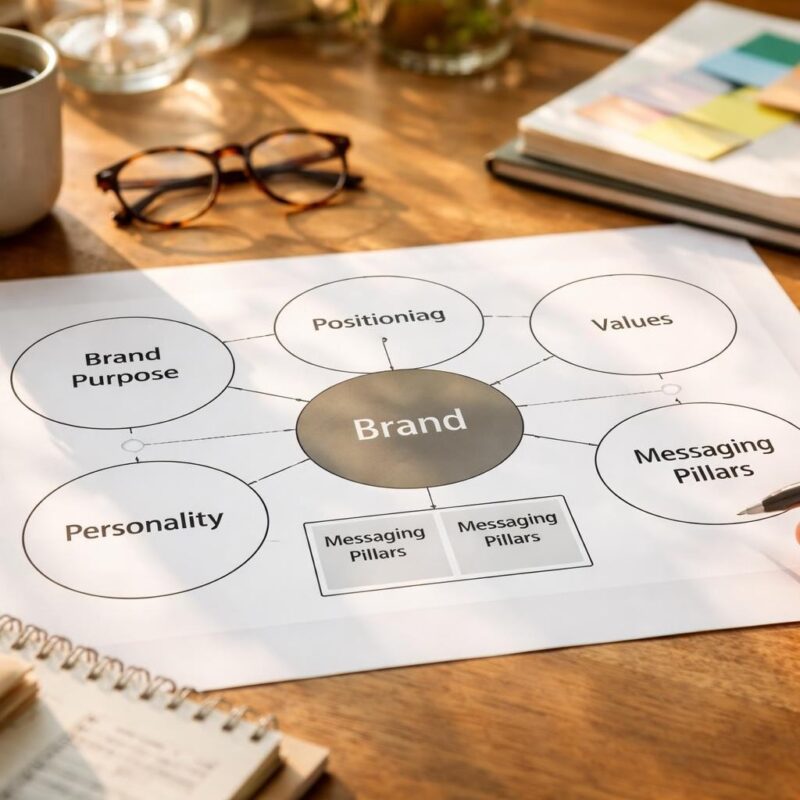
Modern marketing demands more than creative intuition and hopeful guessing. Today's successful brands combine data intelligence, psychological insight, and strategic planning to create campaigns that resonate deeply while delivering measurable results. This intersection of science and creativity defines driven marketing, an approach that transforms how businesses connect with their audiences. By grounding every decision in evidence while maintaining the emotional authenticity that builds lasting relationships, driven marketing represents the evolution of brand building for the digital age.
Understanding Driven Marketing in the Modern Landscape
Driven marketing encompasses multiple philosophies working in harmony. Data-driven marketing uses analytics and metrics to guide strategy, while purpose-driven marketing focuses on values and mission. The most effective approach integrates both, creating campaigns that perform with precision while connecting on a human level.
The foundation rests on collecting meaningful information about your audience, their behaviors, preferences, and pain points. This intelligence informs every aspect of your strategy, from brand development to content creation. However, driven marketing extends beyond numbers alone.
Key components of driven marketing include:
- Comprehensive data collection and analysis
- Audience psychology and behavioral insights
- Clear strategic objectives aligned with business goals
- Creative execution that resonates emotionally
- Continuous measurement and optimization
The psychology component distinguishes truly effective driven marketing from purely analytical approaches. Understanding why people make decisions, what motivates their loyalty, and how emotional connections form enables brands to create campaigns that feel personal rather than transactional.
The Data Foundation
Implementing data-driven marketing strategies requires establishing robust infrastructure for collection, storage, and analysis. This foundation enables informed decision-making across all marketing channels.
Begin by centralizing your data sources. Customer relationship management systems, social media analytics, website behavior tracking, and email marketing metrics should feed into a unified platform. This integration reveals patterns invisible when examining isolated data points.

Quality matters more than quantity. Three hundred highly engaged subscribers provide more value than three thousand disinterested contacts. Focus on accurate, relevant data that directly informs strategic decisions rather than vanity metrics that look impressive but drive no action.
| Data Type | Strategic Value | Collection Method |
|---|---|---|
| Behavioral Analytics | Shows what customers actually do | Website tracking, email engagement |
| Demographic Information | Identifies who your audience is | Surveys, registration forms |
| Psychographic Data | Reveals why customers choose you | Interviews, feedback forms |
| Performance Metrics | Measures campaign effectiveness | Platform analytics, conversion tracking |
Building Your Driven Marketing Strategy
Strategic development begins with clarity about objectives. Generic goals like "increase awareness" lack the specificity needed for driven marketing. Instead, define precise targets: increase qualified leads by 30% within six months, improve email conversion rates to 4.5%, or achieve 25% year-over-year revenue growth from digital channels.
These objectives guide what you measure and how you interpret results. Every metric should connect directly to a strategic goal, creating a clear line between daily activities and business outcomes.
Audience Intelligence and Segmentation
Understanding your audience transforms generic messaging into personalized experiences. Data-driven decision-making practices emphasize creating detailed customer segments based on behaviors, preferences, and lifecycle stages.
Beyond basic demographics, examine behavioral patterns. When do subscribers typically engage with your content? Which topics generate the strongest response? What sequence of touchpoints precedes a purchase decision? This intelligence enables strategic timing and messaging that feels intuitive to recipients.
Psychology adds depth to segmentation. Two customers might share identical demographics but respond to completely different value propositions based on their motivations, fears, and aspirations. Understanding these psychological drivers enables messaging that resonates authentically.
- Collect baseline data across all customer touchpoints
- Identify behavioral patterns that indicate intent or interest
- Create psychological profiles based on values and motivations
- Develop segment-specific strategies addressing unique needs
- Test and refine messaging for each audience segment
The M Method framework exemplifies this integrated approach, combining strategic clarity with psychological insight to create brands that connect emotionally while performing measurably. This methodology ensures every marketing decision serves both human connection and business objectives.
Implementing Driven Marketing Across Channels
Channel selection represents a critical strategic decision. Rather than spreading resources across every platform, driven marketing concentrates effort where your specific audience actively engages. Social media marketing strategies must align with where your target customers spend time and how they prefer to consume content.
Data reveals platform performance objectively. If Instagram generates three times the engagement of Facebook for your brand, resource allocation should reflect that reality. However, engagement metrics alone tell an incomplete story. Examine conversion rates, customer quality, and lifetime value by channel to understand true return on investment.
Content Strategy Driven by Intelligence
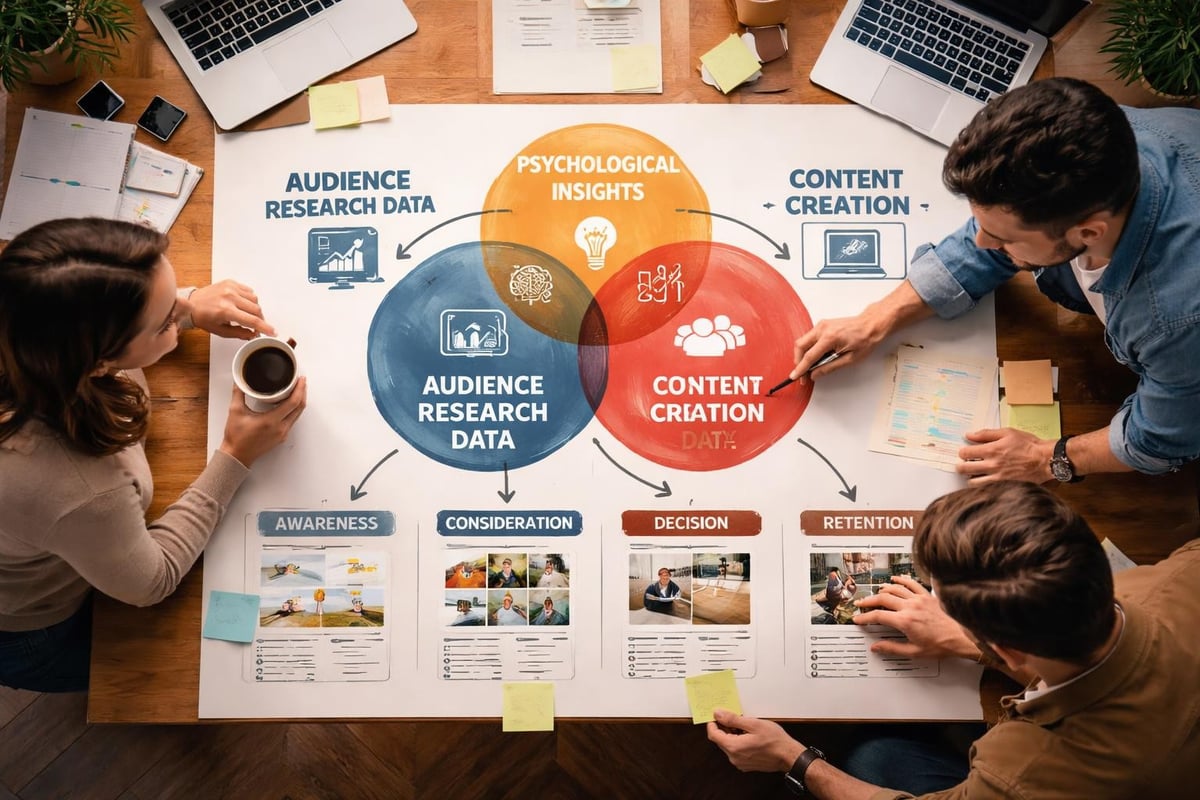
Content creation guided by driven marketing principles starts with audience research rather than assumptions. What questions do potential customers ask before purchasing? Which pain points cause the most frustration? What objections prevent conversion?
Marketing analytics insights transform this information into strategic content calendars addressing specific audience needs at each funnel stage. Top-of-funnel content educates and builds awareness. Middle-funnel content demonstrates expertise and builds trust. Bottom-funnel content addresses objections and facilitates decisions.
Effective content strategies incorporate:
- Keyword research identifying actual search behavior
- Engagement metrics showing what resonates with your audience
- Conversion data revealing which topics drive action
- Feedback and questions directly from customers
- Competitive analysis highlighting content gaps and opportunities
The creative execution must balance data insights with emotional authenticity. Numbers show what topics matter, but psychology determines how to present those topics compellingly. This balance distinguishes driven marketing from purely algorithmic approaches lacking human connection.
Email Marketing Excellence
Email remains one of the highest-performing channels for driven marketing when executed strategically. Segmentation enables personalized messaging at scale, delivering relevant content based on subscriber behavior, preferences, and lifecycle stage.
Automated sequences triggered by specific actions demonstrate driven marketing principles in action. Welcome series for new subscribers, abandoned cart recovery for potential customers, and re-engagement campaigns for inactive contacts all respond intelligently to behavioral signals.
Testing refines every element systematically. Subject lines, sending times, content formats, and calls-to-action all benefit from structured experimentation. A/B testing reveals what actually drives results rather than relying on industry best practices that may not apply to your unique audience.
Measurement and Optimization
Driven marketing distinguishes itself through commitment to continuous improvement. Best practices for data-driven marketing emphasize establishing clear key performance indicators before launching campaigns, enabling objective evaluation of results.
Select metrics that directly connect to business outcomes. Vanity metrics like follower counts or page views provide limited strategic value unless they correlate with conversions, revenue, or other meaningful objectives. Focus measurement on metrics that inform decisions and indicate progress toward goals.
| Metric Category | Examples | Strategic Application |
|---|---|---|
| Acquisition | Cost per lead, traffic sources | Optimize channel investment |
| Engagement | Time on site, email open rates | Refine content strategy |
| Conversion | Landing page conversion, email CTR | Improve messaging and offers |
| Retention | Customer lifetime value, churn rate | Enhance customer experience |
Dashboard creation centralizes critical metrics for regular review. Weekly or monthly analysis identifies trends, anomalies, and opportunities. This rhythm of measurement keeps strategy aligned with reality rather than assumptions.
Attribution and Understanding Impact
Attribution modeling reveals which touchpoints contribute to conversions throughout the customer journey. First-touch attribution credits the initial interaction, while last-touch credits the final touchpoint before conversion. Multi-touch attribution distributes credit across all interactions, providing a more complete picture.
Understanding attribution prevents misallocation of resources. A social media campaign might generate few direct conversions but play a crucial role in awareness that enables later conversion through other channels. Driven marketing recognizes these complex relationships rather than oversimplifying customer journeys.
Advanced approaches like marketing mix modeling quantify the impact of various channels and tactics on overall performance. These insights guide budget allocation based on actual contribution to results rather than assumptions or conventional wisdom.
The Psychology of Connection
Data reveals what happens, but psychology explains why. Driven marketing integrates behavioral science to create campaigns that resonate on a deeper level than surface-level personalization alone achieves.
Understanding psychological triggers like social proof, scarcity, authority, and reciprocity enables strategic application of these principles. However, ethical implementation maintains authenticity rather than manipulative tactics. The goal is genuine connection, not coercion.
Emotional branding creates associations beyond functional benefits. Customers choose brands that align with their identity and values, not just products that meet basic needs. Brand strategy development considers both rational decision factors and emotional drivers.
Psychological principles in driven marketing:
- Reciprocity: Providing value before asking for anything in return
- Consistency: Aligning messaging across all touchpoints and over time
- Social proof: Demonstrating that others trust and choose your brand
- Authority: Establishing expertise through content and credentials
- Likability: Creating genuine connection through authentic communication
Story-driven content engages emotional processing differently than purely informational content. Case studies, customer testimonies, and narrative-based marketing activate different brain regions, creating stronger memory formation and emotional connection.
Personalization at Scale
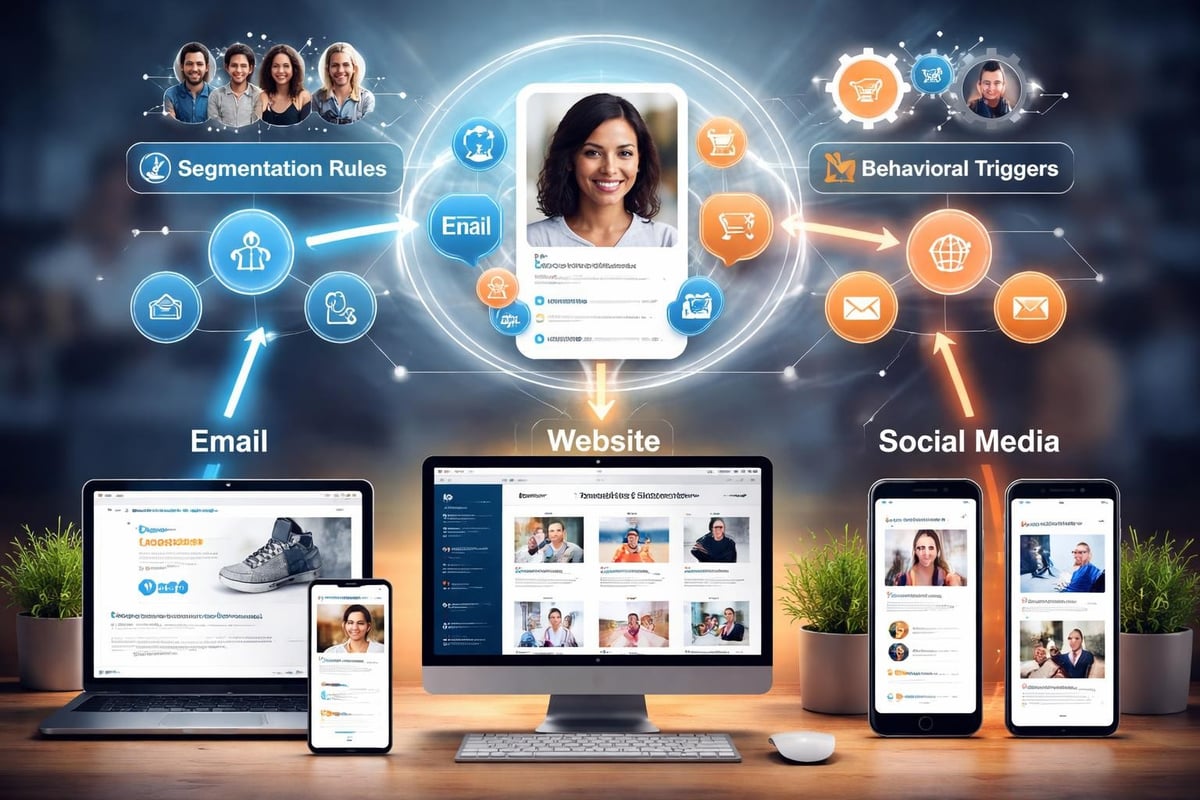
Technology enables individualized experiences previously impossible without massive resources. Marketing automation platforms deliver personalized content based on behavioral triggers, segment membership, and engagement history.
Personalization extends beyond inserting a first name into email subject lines. True personalization recommends products based on purchase history, adjusts content based on engagement patterns, and adapts messaging to lifecycle stage. Data-driven marketing strategies leverage these capabilities to create experiences that feel individually crafted.
Dynamic content changes based on viewer characteristics or behaviors. Email content blocks display differently for various segments. Website experiences adapt based on referral source, previous visits, or geographic location. These techniques apply data intelligence to enhance relevance without requiring manual customization for each individual.
Privacy considerations balance personalization benefits with ethical data usage and regulatory compliance. Transparency about data collection, clear value exchange, and respect for preferences build trust while enabling personalization. Driven marketing prioritizes long-term relationships over short-term optimization that might compromise customer trust.
Integration with Business Strategy
Driven marketing functions most effectively when integrated with overall business strategy rather than operating as an isolated department. Marketing objectives should directly support company goals, with clear accountability for contribution to revenue, growth, and profitability.
Cross-functional collaboration enhances driven marketing effectiveness. Sales teams provide frontline customer insights that inform messaging. Product development benefits from market research that reveals unmet needs. Customer service interactions highlight pain points and opportunities for improved communication.
This integration ensures consistency across the entire customer experience. The brand promise communicated through marketing must align with actual delivery throughout the customer journey. Disconnection between marketing messaging and operational reality undermines trust and damages long-term relationships.
Resource Allocation and ROI
Driven marketing enables strategic budget allocation based on performance data rather than historical spending or intuition. Channels, campaigns, and tactics that deliver strong return on investment receive increased resources, while underperforming initiatives are optimized or eliminated.
Calculate true ROI by considering both direct costs like advertising spend and indirect costs including time, tools, and agency fees. Compare total investment against attributed revenue or other defined value metrics. This comprehensive view prevents the illusion of success from campaigns that generate activity without meaningful business impact.
Experimentation budgets allow testing new channels, tactics, or creative approaches without risking core performance. Allocating 10-15% of marketing budgets to structured experimentation enables innovation while maintaining stability in proven channels.
Building a Driven Marketing Culture
Organizational culture determines whether driven marketing principles actually guide decisions or exist only in documentation. Creating a data-informed culture requires more than implementing tools and processes.
Leadership commitment signals the importance of evidence-based decision making. When executives request data to support recommendations and model analytical thinking in their own decisions, teams follow suit. Without this top-down modeling, driven marketing initiatives often fail to gain traction.
Training ensures team members possess the skills needed to collect, interpret, and apply data effectively. Not everyone needs advanced statistical knowledge, but baseline data literacy enables informed participation in strategic discussions. Understanding what metrics mean, how to interpret trends, and when additional analysis is needed empowers better decision making at all levels.
Elements of a driven marketing culture include:
- Regular review of performance metrics in team meetings
- Experimentation mindset that views tests as learning opportunities
- Transparency about results, including failures and lessons learned
- Accessible dashboards providing real-time performance visibility
- Recognition and rewards for data-informed decision making
Resistance often stems from fear that data will reveal underperformance or eliminate roles. Addressing these concerns through transparent communication about how driven marketing benefits both the organization and individual contributors helps overcome resistance.
Advanced Techniques and Future Trends
Artificial intelligence and machine learning enhance driven marketing capabilities significantly. Predictive analytics forecast customer behavior, enabling proactive strategy. Recommendation engines personalize content automatically. Natural language processing analyzes customer sentiment across thousands of interactions.
These technologies augment human strategy rather than replacing it. The most effective implementations combine algorithmic efficiency with human creativity, strategic thinking, and emotional intelligence. Machines excel at pattern recognition and optimization within defined parameters, while humans excel at creative problem-solving and understanding nuanced context.
Privacy regulations and consumer expectations continue evolving, requiring adaptive approaches to data collection and usage. First-party data becomes increasingly valuable as third-party cookies disappear and tracking becomes more restricted. Building direct relationships that encourage voluntary data sharing through clear value exchange represents the sustainable path forward.
Real-world examples demonstrate driven marketing impact across industries. Case studies of successful implementations show how various organizations apply these principles to achieve measurable results while maintaining brand authenticity.
The future of driven marketing balances increasing technological capabilities with growing emphasis on privacy, authenticity, and meaningful connection. Success requires simultaneously embracing advanced analytics while maintaining the human touch that creates genuine relationships. This duality defines the next evolution of marketing excellence.
Driven marketing represents the convergence of data intelligence, psychological insight, and strategic creativity into an approach that delivers measurable results while building authentic emotional connections. By grounding decisions in evidence while honoring the human elements that create lasting brand loyalty, businesses can achieve sustainable growth in an increasingly competitive landscape. New Love Marketing & Design specializes in this integrated approach, combining The M Method framework with expertise in strategy, psychology, and design to help brands connect emotionally and perform with purpose, transforming marketing from guesswork into a strategic advantage that drives meaningful business outcomes.