
The relationship between digital marketing and ecommerce has transformed how businesses connect with customers and generate revenue. As online shopping continues to dominate consumer behavior in 2026, brands need sophisticated strategies that blend emotional connection with data-driven tactics. Understanding how these two disciplines work together creates opportunities for businesses to build authentic relationships while driving measurable results. The most successful ecommerce brands don't just sell products-they create experiences that resonate with their audience's deepest needs and desires.
The Foundation of Digital Marketing and Ecommerce Integration
Digital marketing and ecommerce function as complementary forces that amplify each other's effectiveness. When executed properly, your marketing efforts don't just generate traffic-they attract qualified visitors who are ready to engage with your brand and make purchases.
Building Authority Through Strategic Content
Authority building represents one of the most critical aspects of successful digital marketing and ecommerce strategies. Search engines and customers alike reward brands that demonstrate genuine expertise and trustworthiness. This principle has become even more important as ecommerce websites focus on expertise, authority, and trust to meet evolving search quality guidelines.
Creating content that establishes your brand as an industry leader requires a multi-faceted approach:
- Publishing in-depth guides that solve specific customer problems
- Sharing case studies that demonstrate real-world results
- Developing educational resources that empower your audience
- Contributing expert insights to industry conversations
The psychology behind authority is straightforward. People buy from brands they trust, and trust develops through consistent demonstration of knowledge, transparency, and value delivery. Understanding what makes authoritative websites credible helps you build a foundation that supports long-term growth.

The M Method Approach to Customer Connection
At New Love Marketing & Design, we recognize that digital marketing and ecommerce success stems from understanding human behavior. Our signature framework, The M Method, integrates psychological principles into every touchpoint of the customer journey.
This approach considers:
- Motivation – What drives your ideal customer to seek solutions
- Message – How your brand communicates value and understanding
- Medium – Which channels effectively reach your audience
- Measurement – How you track emotional and financial ROI
Traditional ecommerce strategies often focus exclusively on conversion optimization and traffic generation. While these metrics matter, they represent outcomes rather than foundations. When you build campaigns around emotional connection and strategic positioning, conversions become a natural result rather than a forced objective.
Content Marketing That Converts Browsers into Buyers
The role of content in digital marketing and ecommerce extends far beyond blog posts and social media updates. Strategic content serves as the bridge between discovery and purchase, nurturing relationships at every stage of the customer journey.
Leveraging Blogs for SEO and Customer Education
Blogs remain essential for ecommerce SEO because they address the questions customers ask before making purchase decisions. When someone searches for information related to your products or services, well-optimized content positions your brand as the solution provider.
Consider these content types that drive both traffic and conversions:
| Content Type | Primary Purpose | SEO Benefit | Conversion Impact |
|---|---|---|---|
| How-to Guides | Education | Long-tail keywords | Builds trust |
| Product Comparisons | Decision support | Transactional intent | Direct conversion |
| Industry Insights | Authority building | Backlink attraction | Brand preference |
| Customer Stories | Social proof | Branded searches | Purchase confidence |
The most effective content strategies align with actual customer search behavior. Research what questions your audience asks, what problems they're trying to solve, and what information gaps exist in your industry. Then create comprehensive resources that become the definitive answers.
Creating Shareable, Linkable Assets
Digital marketing and ecommerce brands benefit significantly from effective link-building tactics that increase domain authority and search visibility. However, link building in 2026 requires genuine value creation rather than manipulative tactics.
High-quality linkable assets include:
- Original research and industry surveys
- Interactive tools and calculators
- Comprehensive resource libraries
- Visual data presentations and infographics
These assets attract natural backlinks because they provide unique value that other content creators want to reference. The psychology here taps into reciprocity and attribution-when you create something genuinely useful, others naturally want to share and credit your work.

Social Media Strategy for Ecommerce Growth
Social platforms have evolved from simple communication channels into sophisticated commerce ecosystems. Digital marketing and ecommerce strategies must leverage these platforms strategically to build community, drive traffic, and generate sales.
Platform Selection and Audience Alignment
Not every social platform deserves equal attention from your brand. Strategic platform selection depends on where your ideal customers spend time and how they prefer to consume content.
Platform characteristics to consider:
- Instagram – Visual storytelling, lifestyle integration, shopping features
- Facebook – Community building, detailed targeting, marketplace opportunities
- Pinterest – Inspiration and discovery, long content lifespan, strong purchase intent
- TikTok – Trend participation, authentic connection, younger demographics
- LinkedIn – B2B relationships, thought leadership, professional credibility
The mistake many brands make is spreading resources too thin across every platform. Focus creates better results than presence. Choose two or three platforms where your audience actively engages, then develop deep expertise in those channels.
Content That Builds Emotional Connections
Social media success in digital marketing and ecommerce requires moving beyond product promotion. Your content should reflect understanding of customer aspirations, challenges, and values. This aligns with avoiding common brand mistakes that undermine emotional connection.
People don't follow brands to see advertisements-they follow for inspiration, entertainment, education, and community. Your social strategy should deliver these elements consistently:
- Share behind-the-scenes content that humanizes your brand
- Celebrate customer stories and transformations
- Provide valuable tips and actionable advice
- Engage authentically in conversations and comments
- Create content that reflects your audience's identity and aspirations
The psychology of social media centers on belonging and identity. When your content helps people feel seen, understood, and connected to something larger than themselves, engagement and loyalty follow naturally.
Email Marketing and Customer Retention
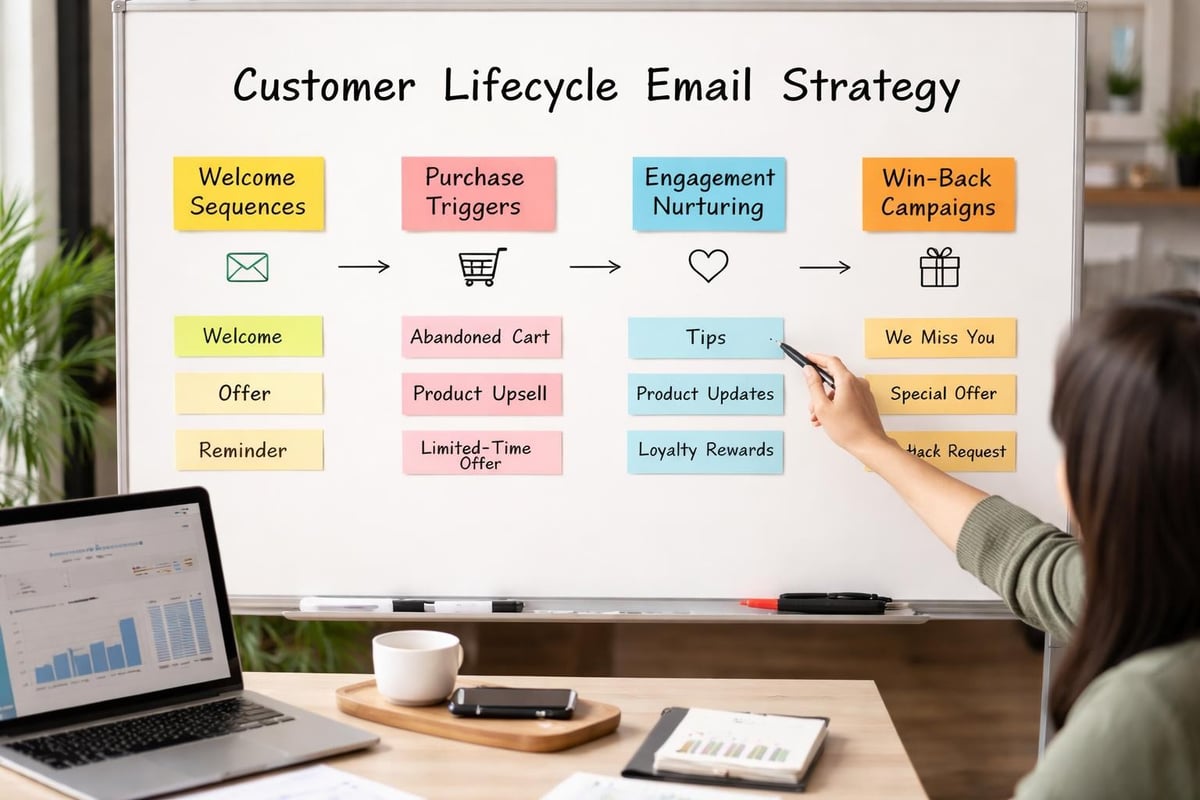
While acquisition strategies often dominate digital marketing and ecommerce discussions, retention determines long-term profitability. Email marketing remains one of the most effective channels for nurturing customer relationships and driving repeat purchases.
Segmentation Strategies That Increase Relevance
Generic email blasts damage brand perception and waste opportunities. Strategic segmentation allows you to deliver personalized messages that resonate with specific customer groups.
Effective segmentation approaches:
- Purchase history and product preferences
- Engagement level and email interaction patterns
- Customer lifecycle stage (new, active, lapsed)
- Demographic and psychographic characteristics
- Browsing behavior and abandoned cart data
Each segment requires different messaging, offers, and content. A first-time buyer needs different communication than a loyal repeat customer. Someone who abandoned their cart responds to different triggers than someone who regularly opens emails but rarely purchases.
Automation That Feels Personal
Marketing automation enables digital marketing and ecommerce brands to deliver timely, relevant messages at scale without sacrificing personal touch. The key is designing flows that respond to customer behavior and preferences.
| Automation Type | Trigger | Primary Goal | Key Elements |
|---|---|---|---|
| Welcome Series | Email subscription | Relationship building | Brand story, values, expectations |
| Abandoned Cart | Cart abandonment | Conversion recovery | Product reminder, urgency, incentive |
| Post-Purchase | Order confirmation | Satisfaction and upsell | Usage tips, complementary products |
| Re-engagement | Inactivity period | Retention | Nostalgia, new offerings, feedback request |
The most effective automated emails sound like they come from a person who understands the recipient's situation. Use conversational language, acknowledge specific actions, and provide genuine value beyond sales pitches.
Building Website Authority and Domain Trust
Search visibility and customer confidence both depend on establishing your website as an authoritative source. Digital marketing and ecommerce success requires understanding how to build website authority through quality signals that search engines and humans both recognize.
Technical Foundation for Authority
Before content and links can build authority, your website needs a solid technical foundation. Search engines evaluate numerous technical factors when determining which sites deserve prominent rankings.
Essential technical elements include:
- Fast page load speeds across all devices
- Mobile-responsive design and functionality
- Secure HTTPS encryption
- Clean site architecture and logical navigation
- Structured data markup for enhanced search results
These technical factors impact user experience as much as search rankings. When visitors encounter slow loading times, confusing navigation, or mobile display issues, they leave-regardless of how great your products or content might be.
Quality Backlink Acquisition
Links from other websites serve as votes of confidence in your brand's credibility. However, link building for ecommerce websites requires strategic approaches that generate genuine endorsements rather than manipulative tactics.
The most sustainable link-building strategies focus on creating value:
- Develop original research that industry publications want to cite
- Build tools or resources that solve common customer problems
- Contribute expert commentary to journalist requests
- Form partnerships with complementary brands
- Create visual assets that bloggers and media outlets want to share
Quality matters far more than quantity in 2026. A single link from a highly respected industry publication carries more weight than dozens of links from low-quality directories. Focus your efforts on earning recognition from authoritative sources that your target audience already trusts.
Paid Advertising Strategy for Ecommerce
Organic digital marketing and ecommerce strategies build sustainable long-term growth, but paid advertising accelerates results and provides immediate visibility. The key is integrating paid channels into a cohesive strategy rather than treating them as isolated tactics.
Platform-Specific Advertising Approaches
Different advertising platforms serve different purposes in the customer journey. Strategic advertisers understand which platforms work best for various objectives and audience segments.
Google Ads excel at capturing high-intent searches when people actively seek solutions. These campaigns target specific keywords and product searches, connecting your offerings with ready-to-buy customers.
Facebook and Instagram Ads work well for building awareness and nurturing consideration. These platforms enable sophisticated audience targeting based on interests, behaviors, and demographics, making them ideal for introducing your brand to new potential customers.
Retargeting campaigns bring back visitors who showed interest but didn't convert. These ads remind people of products they viewed, address common objections, and provide incentives to complete purchases.
Budget Allocation and Performance Measurement
Effective digital marketing and ecommerce strategies distribute advertising budgets based on performance data rather than guesswork or equal distribution. Start with test budgets across different channels, measure results rigorously, then scale investment in the highest-performing platforms.
Track these essential metrics:
- Cost per acquisition (CPA)
- Return on ad spend (ROAS)
- Customer lifetime value (CLV)
- Click-through rate (CTR)
- Conversion rate by channel
The most sophisticated brands track beyond immediate conversions to understand the full customer journey. A customer might discover your brand through a Facebook ad, research on Google, and convert through an email promotion. Attribution modeling helps you understand which touchpoints deserve credit for the final sale.
Professional Presentation and Brand Consistency
Your brand's visual and verbal presentation significantly impacts how customers perceive quality and value. Digital marketing and ecommerce require professional presentation across every customer touchpoint to build credibility and command premium positioning.
Visual Identity That Communicates Quality
Design choices communicate volumes about your brand before customers read a single word. Colors, typography, imagery, and layout all contribute to instant impressions that influence trust and purchase decisions.
Key visual elements to optimize:
- Consistent color palette across all channels
- Professional product photography with proper lighting
- Clean, modern website design with intuitive navigation
- Cohesive social media aesthetic
- High-quality graphics and branded templates
Consistency matters as much as quality. When your Instagram, website, email, and packaging all reflect the same visual identity, you create recognition and reinforce brand memory. Inconsistency suggests disorganization or lack of attention to detail-qualities that undermine purchase confidence.
Voice and Messaging Alignment
Your brand voice represents how you communicate personality, values, and positioning through words. Digital marketing and ecommerce brands need distinctive voices that resonate with their ideal customers while remaining authentic to their true identity.
Consider these voice characteristics:
| Voice Attribute | Example Brand Types | Customer Appeal |
|---|---|---|
| Professional and authoritative | B2B, luxury, technical | Expertise, reliability |
| Friendly and conversational | Lifestyle, community-focused | Approachability, relatability |
| Bold and provocative | Disruptive, youth-oriented | Innovation, authenticity |
| Nurturing and supportive | Wellness, education | Care, understanding |
Your voice should align with customer expectations for your industry while differentiating you from competitors. A financial services brand using the same playful tone as a youth fashion retailer would create cognitive dissonance that damages trust.
Data-Driven Optimization and Growth
The most successful digital marketing and ecommerce strategies evolve continuously based on performance data and customer feedback. Growth requires systematic testing, measurement, and refinement rather than setting campaigns and hoping for results.
Analytics Implementation and Interpretation
Understanding what's working and what isn't requires robust analytics tracking across all marketing channels. Set up comprehensive tracking that captures customer behavior from first touch through post-purchase engagement.
Essential analytics to monitor:
- Traffic sources and channel performance
- On-site behavior and navigation patterns
- Conversion funnels and drop-off points
- Customer demographics and psychographics
- Product performance and category trends
Raw data means nothing without interpretation. Look for patterns, anomalies, and insights that suggest opportunities for improvement. Why do certain products convert better than others? Which traffic sources generate the highest lifetime value customers? What content topics drive the most engagement?
Continuous Testing and Improvement
Digital marketing and ecommerce success comes from marginal gains compounded over time. Systematic testing helps you discover what resonates with your specific audience rather than relying on industry best practices that may not apply to your brand.
High-impact testing opportunities include:
- Email subject lines and preview text
- Product page layouts and call-to-action placement
- Pricing strategies and promotional offers
- Ad creative and messaging variations
- Landing page designs and content structure
Test one variable at a time to isolate what drives performance changes. Run tests long enough to gather statistically significant data before drawing conclusions. Document results and insights to build institutional knowledge that informs future decisions.
Integrated Strategy for Maximum Impact
The most powerful digital marketing and ecommerce results come from integrated strategies where each channel and tactic reinforces the others. Isolated efforts generate limited results compared to coordinated campaigns that create multiple touchpoints throughout the customer journey.
Creating Cohesive Customer Experiences
Customers don't think in terms of channels-they experience your brand as a unified entity across every interaction. Your job is ensuring those interactions feel connected and purposeful rather than disconnected and random.
An integrated approach might look like this:
- Blog content addresses customer questions and establishes expertise
- Social media shares blog insights and drives traffic to product pages
- Email campaigns nurture leads with additional valuable content
- Retargeting ads remind visitors of products they explored
- Post-purchase emails educate customers and encourage reviews
Each touchpoint serves a specific purpose while supporting the overall relationship. The blog builds trust, social creates awareness, email nurtures consideration, ads drive action, and post-purchase communication generates loyalty.
Resource Allocation and Priority Setting
Most businesses face resource constraints that require strategic choices about where to focus energy and investment. Trying to execute every possible digital marketing and ecommerce tactic simultaneously dilutes impact and exhausts teams. For insights on strategic focus, consider how rebranding efforts can clarify priorities and reinvigorate growth.
Framework for priority setting:
- Identify your primary business objective (awareness, conversion, retention)
- Determine which channels best support that objective
- Allocate 70% of resources to proven performers
- Reserve 20% for growth opportunities and optimization
- Dedicate 10% to experimental tactics and innovation
This allocation ensures stability while enabling growth and learning. You maintain momentum in what works while discovering new opportunities that could become future primary strategies.
Successful digital marketing and ecommerce requires the strategic integration of psychology, creativity, and data-driven decision-making to build brands that connect authentically while driving measurable results. Whether you're launching a new online store or revitalizing an established brand, the right partner makes all the difference. New Love Marketing & Design combines deep expertise in customer psychology with proven strategic frameworks to help businesses grow with clarity, purpose, and emotional resonance. Let's create a digital presence that doesn't just attract customers-it builds lasting relationships that fuel sustainable growth.