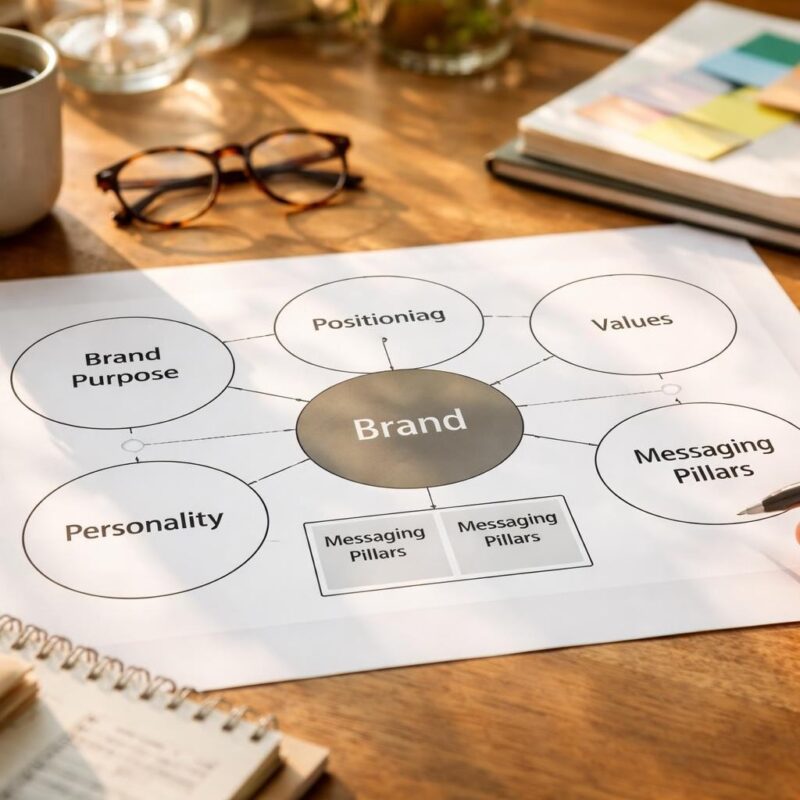
Developing a brand is far more than creating a logo or choosing color palettes. It represents the strategic process of shaping how your audience perceives, experiences, and emotionally connects with your business. In 2026, successful brand development requires a deliberate blend of psychology, strategic positioning, and authentic storytelling that resonates across every touchpoint. Whether you're launching a startup or repositioning an established company, understanding the fundamentals of brand development will determine your ability to stand out in an increasingly crowded marketplace.
Understanding the Foundation of Brand Development
Developing a brand begins with clarity about your core identity. Before diving into visual elements or marketing campaigns, businesses must establish their fundamental purpose, values, and positioning in the market. This foundation serves as the north star for every subsequent decision, from messaging to customer experience.
Defining Your Brand Purpose and Values
Your brand purpose answers the essential question: Why does your business exist beyond making money? This deeper mission creates emotional resonance with audiences who share similar values. Research shows that purpose-driven brands build stronger customer loyalty and command premium positioning in their markets.
Key elements to define:
- Core mission statement that reflects your business impact
- Values that guide decision-making and company culture
- Vision for how you want to transform your industry or customer lives
- Unique perspective that differentiates you from competitors
The brand development strategy framework emphasizes that these foundational elements must align authentically with your business actions. Empty promises or misaligned values quickly erode trust and credibility.
Identifying Your Target Audience
Effective brand development requires deep understanding of who you're serving. Generic messaging that attempts to appeal to everyone ultimately connects with no one. Instead, successful brands develop detailed audience profiles that inform every creative and strategic decision.
| Audience Research Component | Purpose | Application |
|---|---|---|
| Demographics | Basic segmentation data | Inform channel selection and content formats |
| Psychographics | Values, attitudes, motivations | Shape messaging and emotional positioning |
| Pain Points | Problems needing solutions | Guide product development and value propositions |
| Behavioral Patterns | How they research and purchase | Optimize customer journey and touchpoints |
Developing a brand that truly resonates means understanding not just what your audience needs, but how they think, feel, and make decisions. This psychological insight allows you to craft messages that speak directly to their underlying motivations and desires.

Crafting Your Brand Identity System
Once your strategic foundation is established, developing a brand requires translating abstract concepts into tangible identity elements. This visual and verbal system becomes the consistent expression of your brand across all customer touchpoints.
Visual Identity Beyond the Logo
While logos anchor brand recognition, comprehensive visual identity extends far beyond a single mark. Your visual system should communicate personality, establish hierarchy, and create memorable consistency across diverse applications.
Essential visual identity components:
- Primary and secondary logos with usage guidelines
- Color palette with psychological and cultural considerations
- Typography system that reflects brand personality
- Photography and illustration style guidelines
- Graphic elements and pattern systems
- Layout principles and spatial relationships
The psychology of color and form plays a crucial role in developing a brand identity that communicates the right emotional cues. Warm colors evoke energy and passion, while cool tones suggest professionalism and trust. Similarly, rounded forms feel approachable and friendly, whereas angular shapes convey strength and precision.
Building Your Verbal Identity
Brand voice and messaging frameworks ensure consistency in how you communicate across channels. Your verbal identity includes the language patterns, tone, vocabulary, and storytelling approach that make your brand recognizable even without visual elements.
Consider how your brand would communicate in different scenarios. Would you use humor or maintain serious professionalism? Do you speak as an authority figure or a collaborative partner? These decisions shape the digital branding presence that audiences experience across social media, websites, and customer service interactions.
Creating Brand Guidelines
Documentation ensures consistency as your brand scales. Comprehensive brand guidelines serve as the reference point for anyone creating content, designing materials, or representing your brand. The University of Arkansas brand guidelines demonstrate how thorough documentation maintains cohesion across diverse applications and stakeholders.
Your guidelines should include:
- Brand story and positioning statement
- Visual identity specifications with technical details
- Voice and tone principles with examples
- Approved and prohibited usage scenarios
- Templates and asset libraries
- Contact information for brand questions
Strategic Positioning and Differentiation
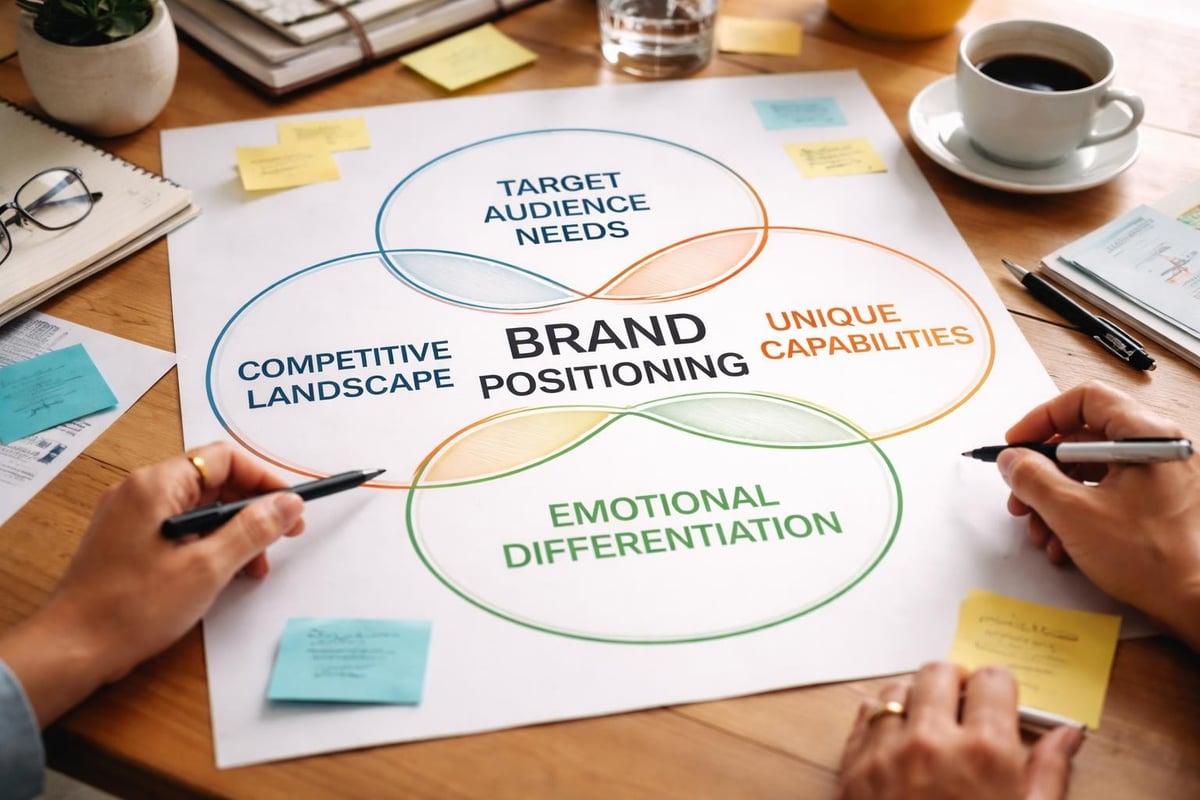
Developing a brand requires claiming a distinct position in your market landscape. Without clear differentiation, you become a commodity competing solely on price or convenience. Strategic positioning articulates why customers should choose you over alternatives.
Competitive Analysis and Market Gaps
Understanding your competitive environment reveals opportunities for unique positioning. Analyze not just direct competitors offering similar products, but indirect alternatives solving the same customer problems through different approaches.
| Analysis Dimension | Questions to Answer | Strategic Implications |
|---|---|---|
| Market Position | Where do competitors sit on price/quality spectrum? | Identify underserved segments |
| Messaging Themes | What promises do they make? | Find unexplored emotional territories |
| Visual Conventions | What design patterns dominate? | Opportunity to zig while others zag |
| Customer Experience | Where do they excel or fail? | Differentiate through superior touchpoints |
The concept of diversification as a marketing strategy can inform how you position multiple offerings under your brand umbrella while maintaining coherent identity.
Defining Your Unique Value Proposition
Your unique value proposition crystallizes what makes you different and better for your specific audience. This isn't about being everything to everyone, but rather being the perfect solution for your ideal customers.
Effective value propositions:
- Speak to specific customer outcomes, not features
- Address emotional and functional benefits
- Communicate clear differentiation from alternatives
- Remain concise and memorable
- Prove credibility through evidence or guarantees
Developing a brand with a compelling value proposition requires honest assessment of your genuine strengths. Manufactured differentiation that doesn't reflect reality creates disappointed customers and damaged reputation.
Building Emotional Connection Through Storytelling
Rational features and benefits establish baseline interest, but emotional connection drives loyalty and advocacy. Developing a brand that people genuinely care about requires authentic storytelling that invites audiences into a larger narrative.
The Psychology of Brand Connection
Neuroscience research reveals that emotional responses drive decision-making far more than logical analysis. When developing a brand, understanding these psychological triggers allows you to craft experiences that resonate at a deeper level. People don't just buy products; they buy identities, aspirations, and belonging to communities that reflect their values.
Effective brand communication and storytelling creates mental associations between your brand and positive emotions. This emotional equity becomes a competitive moat that price-focused competitors struggle to breach.
Crafting Your Brand Narrative
Your brand story isn't your company history or founder biography. It's the larger narrative about transformation and possibility that invites customers to see themselves as the hero. Your brand plays the role of guide, providing tools and wisdom that enable their success.
Powerful brand narratives include:
- Clear articulation of the problem or conflict
- Stakes that make the outcome matter
- Your unique perspective or approach
- Customer transformation and success
- Vision for a better future
The most effective stories feel personal and authentic rather than manufactured. Developing a brand narrative means uncovering the genuine passion and purpose that motivated your business creation, then communicating that origin in ways that resonate with customer experiences.
Consistency Across the Customer Journey
Emotional connection requires consistent reinforcement across every interaction. From first awareness through purchase and beyond, each touchpoint should deliver experiences aligned with your brand promise. Inconsistency creates cognitive dissonance that erodes trust.
Map your customer journey and audit how well each stage reflects your brand identity. Does your website experience match the personality in your social media? Do customer service interactions embody the values you promote? These details determine whether developing a brand translates into genuine relationship building.
Digital Brand Presence and Activation
In 2026, digital channels represent primary brand touchpoints for most audiences. Developing a brand without strategic digital presence means missing opportunities to connect, engage, and convert potential customers where they spend attention.
Social Media as Brand Expression
Social platforms offer unprecedented opportunities for authentic brand expression and community building. Rather than treating social media as purely promotional channels, effective brands use these spaces for genuine conversation and value delivery.
Platform-specific considerations:
- LinkedIn: Professional thought leadership and industry insights
- Instagram: Visual storytelling and lifestyle integration
- TikTok: Authentic, unpolished brand personality
- Twitter/X: Real-time engagement and cultural participation
- Facebook: Community building and customer service
Each platform has distinct conventions and audience expectations. Developing a brand across multiple channels requires adapting your core identity to platform-specific contexts while maintaining recognizable consistency.
Content Strategy That Builds Authority
Strategic content creation positions your brand as a trusted resource rather than just a vendor. When you consistently deliver valuable insights, education, or entertainment, you build permission to eventually make commercial offers. This approach recognizes that modern buyers conduct extensive research before engaging sales conversations.
Your content strategy should address the questions, challenges, and interests of your target audience throughout their decision journey. Early-stage content builds awareness and educates about problems. Middle-stage content demonstrates your unique approach and capabilities. Late-stage content provides proof and reduces purchase friction.
Website as Brand Hub
While social platforms provide reach and engagement, your website remains the digital property you fully control. Developing a brand online requires treating your website as the authoritative source for brand experience and conversion.
Modern website design balances aesthetic appeal with functional performance. Page speed, mobile optimization, and intuitive navigation impact both user experience and search visibility. Your site should clearly communicate who you serve, what you offer, and why you're different within seconds of arrival.

Brand Architecture and Scalability
As businesses grow, developing a brand includes decisions about how to structure multiple products, services, or sub-brands. Strategic brand architecture determines whether you leverage a single brand across offerings or create distinct identities for different markets.
Umbrella Branding Strategies
The umbrella brand approach uses one master brand across multiple products or services. This strategy maximizes brand equity transfer and reduces marketing costs, as recognition and trust built in one category benefits all offerings. Companies like Apple exemplify umbrella branding, with consistent identity across diverse product categories.
Benefits of umbrella branding:
- Efficient marketing investment and brand building
- Easier launch of new products leveraging existing equity
- Clear, consistent customer understanding
- Streamlined brand management
Developing a brand as an umbrella requires strong core identity that translates across diverse applications while maintaining relevance and authenticity.
Individual Product Branding
Conversely, individual branding creates distinct identities for different offerings. This approach allows precise positioning for specific market segments and contains risk if one product faces challenges. Consumer goods companies often use this strategy to own multiple positions in the same category.
The decision between umbrella and individual branding depends on your market structure, target audiences, and strategic goals. Some businesses use hybrid approaches, creating sub-brands that maintain connection to the parent brand while expressing distinct personalities.
Brand Extension Considerations
Brand extension involves leveraging established brand equity to enter new categories. Successful extensions maintain logical connection to core brand associations while offering genuine value in new contexts. Failed extensions stretch too far, confusing customers about brand meaning or delivering inferior experiences that damage the parent brand.
When considering extension opportunities, evaluate whether your brand's core associations transfer positively to the new category and whether you can deliver authenticity and excellence in that space.
Measuring Brand Development Success
Developing a brand requires ongoing measurement and optimization. Unlike direct-response marketing with immediate conversion metrics, brand building generates long-term equity that compounds over time.
Quantitative Brand Metrics
Key performance indicators for brand development:
| Metric Category | Specific Measures | What It Reveals |
|---|---|---|
| Awareness | Aided/unaided recall, search volume | Market penetration and visibility |
| Perception | Brand attribute surveys, sentiment analysis | How audience views your positioning |
| Preference | Consideration rates, NPS scores | Competitive strength and loyalty |
| Financial | Price premium, customer lifetime value | Economic impact of brand equity |
Regular measurement establishes baselines and tracks progress over time. Developing a brand strategically means using data to inform refinements while maintaining consistent core identity.
Qualitative Brand Insights
Numbers reveal what is happening, but qualitative research explains why. Customer interviews, focus groups, and social listening provide context about emotional connections, perceptions, and unmet needs.
Pay attention to the language customers use when describing your brand. Do they use the words you emphasize in messaging? What associations arise unprompted? These insights reveal whether your intended positioning matches perceived reality.
Brand Audit and Evolution
Periodic comprehensive brand audits assess alignment between strategy and execution. Review all brand touchpoints for consistency, evaluate competitive positioning changes, and identify opportunities for evolution without abandoning equity you've built.
Developing a brand is never truly finished. Markets shift, audiences evolve, and competitive landscapes transform. Successful brands maintain core identity while adapting expression to remain relevant and resonant with contemporary culture.
Implementation and Activation
Strategic planning means nothing without disciplined execution. Developing a brand requires translating strategy into consistent action across your organization.
Internal Brand Alignment
Your team must understand and embody the brand before customers will believe it. Internal education ensures everyone from leadership to frontline staff can articulate brand positioning and deliver experiences that reinforce it.
Internal activation steps:
- Leadership modeling of brand values
- Employee training on brand strategy and guidelines
- Integration into hiring and performance evaluation
- Regular communication reinforcing brand priorities
- Empowerment to make brand-aligned decisions
When employees genuinely connect with brand purpose, they become authentic ambassadors rather than scripted representatives.
Partnership and Collaboration
Working with specialists accelerates and elevates brand development outcomes. Branding agencies bring expertise, objectivity, and creative capabilities that complement internal knowledge. The right partnership combines outside perspective with deep understanding of your business, customers, and aspirations.
Whether engaging agencies, freelancers, or building internal teams, ensure collaborators understand the strategic foundation driving creative decisions. Developing a brand succeeds when everyone works from shared understanding of purpose, audience, and differentiation.
Launch and Ongoing Management
Brand rollouts require coordination across channels and touchpoints. Create implementation timelines that sequence introduction logically, building momentum and consistency. Consider soft launches that test and refine before full-scale activation.
Post-launch, establish governance processes that maintain brand integrity while allowing necessary flexibility. Centralize asset management, approve major applications, and provide resources that make compliance easier than improvisation.
Developing a brand demands strategic thinking, creative expression, and disciplined execution working in concert to shape perception and drive business results. When psychology, strategy, and design align authentically, brands transcend transactional relationships to create emotional connections that fuel sustainable growth. New Love Marketing & Design specializes in guiding businesses through this transformative process using The M Method framework, blending strategic clarity with creative impact to develop brands that genuinely resonate and perform with measurable purpose.