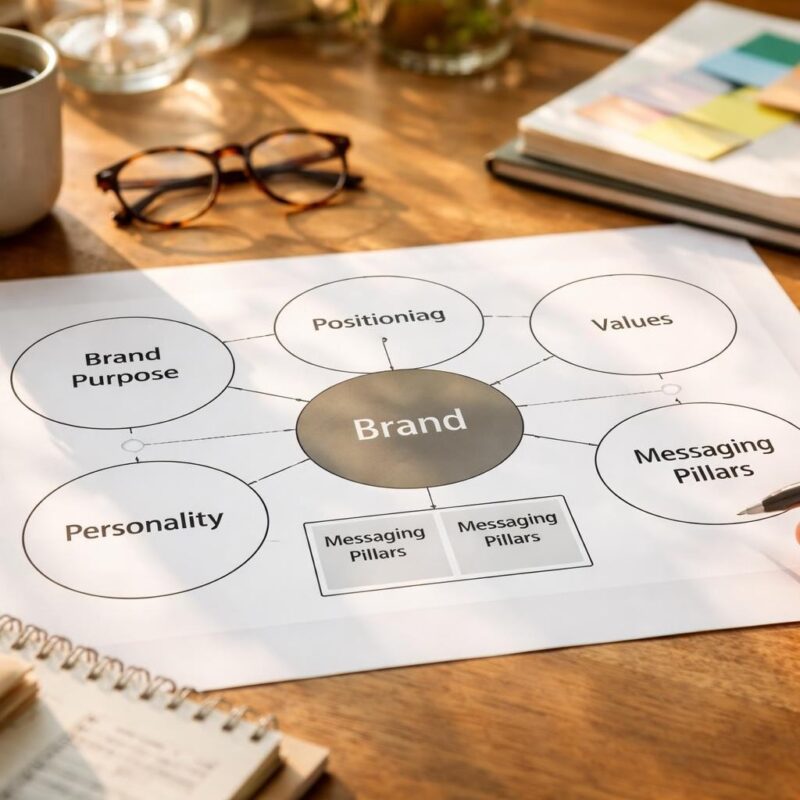
Branding rebranding represents one of the most significant strategic decisions a business can make. Whether your brand has outgrown its original identity, your market position has shifted, or your visual presence no longer reflects who you are, the process of reinventing your brand requires careful planning, emotional intelligence, and a deep understanding of what truly connects with your audience. This transformation goes beyond changing a logo or updating colors. It’s about realigning every touchpoint of your brand to create authentic connections that drive business growth.
Understanding When Branding Rebranding Becomes Necessary
Every business reaches inflection points where the current brand identity no longer serves its purpose. Recognizing these moments requires honest assessment of both internal evolution and external market dynamics.
Signs Your Business Needs a Brand Refresh
Several indicators suggest it’s time to consider branding rebranding as a strategic priority. Your visual identity might feel dated compared to competitors, or perhaps your messaging no longer resonates with your target audience. Maybe you’ve expanded services beyond your original offerings, or your company has merged with another organization requiring a unified identity.
Common triggers for brand transformation include:
- Significant business pivots or expansion into new markets
- Outdated visual elements that diminish credibility
- Confusion about what your company actually does
- Disconnect between brand promise and customer experience
- Negative brand associations requiring distance
- Leadership changes bringing new strategic direction

Market research plays a crucial role in this evaluation. Your customers’ perception of your brand might differ dramatically from your intended positioning. Understanding rebranding fundamentals helps establish a framework for making this decision objectively rather than emotionally.
The Psychology Behind Brand Transformation
Branding rebranding taps into powerful psychological principles. Humans naturally resist change while simultaneously seeking novelty and improvement. This paradox creates both opportunity and risk during brand transitions.
Your existing customers have built emotional connections with your current brand. These neural pathways associate your logo, colors, and messaging with their experiences and the value you’ve delivered. Disrupting these associations requires careful management to maintain trust while introducing fresh elements.
| Psychological Factor | Impact on Rebranding | Strategic Response |
|---|---|---|
| Brand Loyalty | Customers resist dramatic changes | Phase transitions gradually |
| Familiarity Bias | People prefer what they know | Maintain some recognizable elements |
| Cognitive Dissonance | Confusion damages trust | Communicate reasons clearly |
| Status Quo Bias | Fear of negative outcomes | Demonstrate concrete benefits |
Strategic brand development requires balancing these psychological factors with business objectives. The most successful branding rebranding initiatives honor existing brand equity while boldly stepping into new territory.
Strategic Framework for Successful Brand Transformation
A methodical approach to branding rebranding minimizes risk while maximizing impact. This process demands strategic thinking, creative execution, and organizational alignment.
Conducting Comprehensive Brand Audits
Before redesigning anything, you must understand where you currently stand. A thorough brand audit examines every customer touchpoint, competitive positioning, and internal perception.
Essential audit components include:
- Visual identity assessment across all platforms and materials
- Messaging consistency evaluation in communications
- Customer perception research through surveys and interviews
- Competitive landscape analysis identifying differentiation opportunities
- Internal stakeholder alignment understanding employee perspectives
- Brand equity measurement quantifying existing value
This diagnostic phase reveals gaps between current state and desired positioning. You might discover that your social media presence communicates a different personality than your website, or that customers value aspects of your service you’ve never emphasized.
Defining Your New Brand Strategy
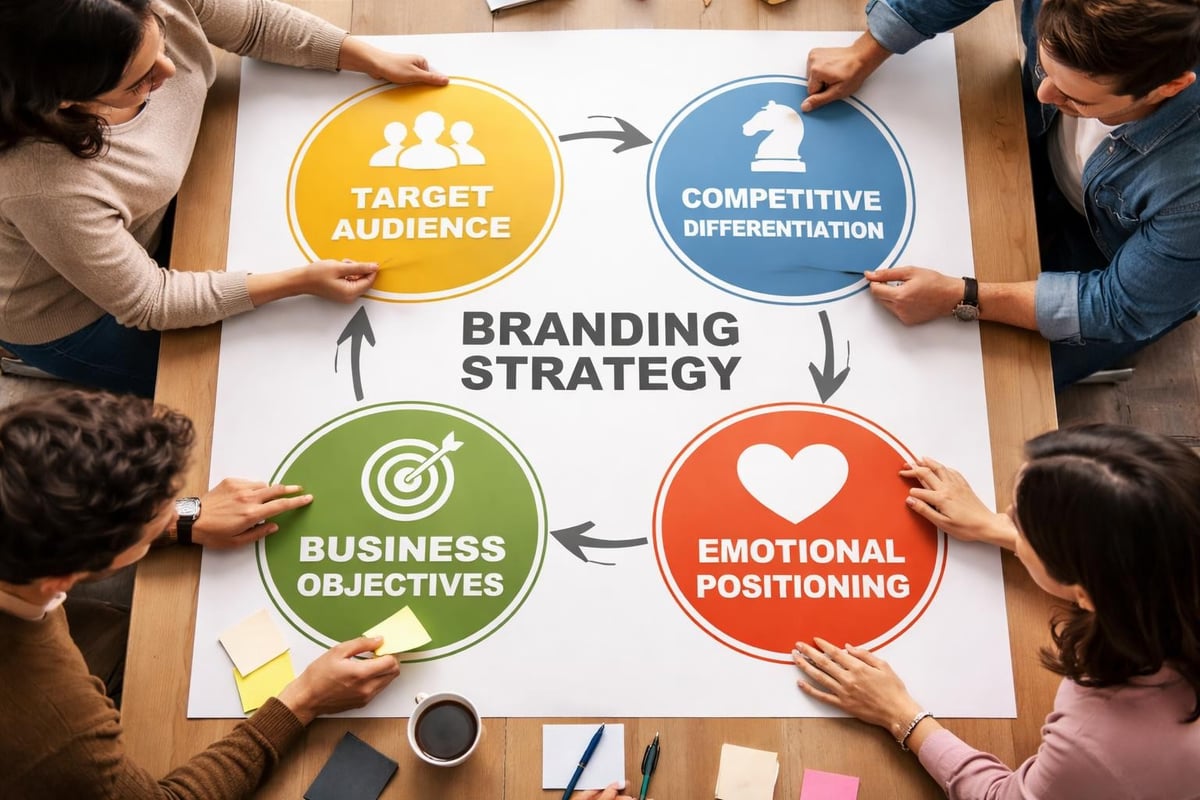
Branding rebranding succeeds when anchored in clear strategic direction. This foundation guides every creative decision and ensures consistency across implementation.
Your brand strategy articulates who you serve, what makes you different, and why customers should choose you. It defines your brand personality, voice, values, and positioning in language specific enough to guide decisions but flexible enough to allow creative expression.
Strategic clarity emerges through answering:
- What core problem do we solve uniquely well?
- Who is our ideal customer and what do they truly need?
- What emotions should our brand evoke?
- How do we want to be perceived differently than competitors?
- What brand promise can we consistently deliver?
Famous rebranding examples demonstrate how strategic clarity drives transformation. Apple’s evolution from complicated technology to intuitive design reflected a fundamental shift in company purpose. Airbnb’s transformation from air mattresses to belonging anywhere articulated a deeper emotional promise.
Executing the Creative Transformation
Once strategy is defined, creative execution brings your new brand to life. This phase requires both artistic vision and systematic implementation.
Visual Identity Development
Your visual identity serves as the most immediately recognizable element of branding rebranding. Logo design, color palette, typography, imagery style, and design system all communicate your brand personality before a single word is read.
| Design Element | Strategic Function | Execution Considerations |
|---|---|---|
| Logo | Instant recognition and differentiation | Versatility across applications |
| Color Palette | Emotional resonance and consistency | Psychological associations and accessibility |
| Typography | Personality expression and readability | Hierarchy and brand voice alignment |
| Imagery Style | Visual storytelling and authenticity | Consistency and audience relevance |
| Design System | Scalable brand application | Flexibility and guidelines clarity |
The most effective visual transformations maintain subtle connections to heritage while signaling evolution. Successful rebranding trends show how companies balance familiarity with freshness through thoughtful design choices.
Professional design services ensure your visual identity translates effectively across digital and physical applications. What works beautifully on a website might fail on packaging or signage without proper technical execution.
Messaging and Voice Refinement
Branding rebranding extends beyond visual changes to how you communicate. Your brand voice, messaging hierarchy, and storytelling approach must align with your strategic positioning.
Key messaging components include:
- Brand story explaining your origin, purpose, and vision
- Value propositions articulating specific customer benefits
- Tagline or positioning statement capturing essence memorably
- Messaging pillars supporting consistent communication themes
- Tone and voice guidelines ensuring personality consistency
Every piece of content, from social media posts to sales presentations, should reflect your refined brand personality. This consistency builds recognition and reinforces your positioning in customer minds.
Implementation and Launch Strategy
How you introduce your rebrand significantly impacts its reception and success. Strategic rollout maximizes positive impact while minimizing confusion or resistance.
Internal Alignment Before External Launch
Your team must embrace the new brand before customers encounter it. Internal stakeholders serve as brand ambassadors whose enthusiasm and understanding influence market perception.
Successful internal rollout includes:
- Early involvement of key team members in strategy development
- Comprehensive training on brand guidelines and application
- Clear communication about reasons driving the change
- Tools and resources enabling consistent brand execution
- Celebration of the transformation creating ownership
When employees understand the strategic rationale behind branding rebranding, they become powerful advocates who authentically communicate your new positioning.
Phased External Communication
Launching your rebrand requires carefully orchestrated communication addressing different stakeholder groups. Current customers need different messaging than prospects, and your approach should reflect these distinctions.
Consider timing your announcement to coincide with meaningful business milestones or seasonal opportunities. Brand transformation case studies reveal how companies leverage product launches, anniversaries, or market expansions to contextualize rebranding.
Your communication should address three critical questions: What changed? Why did it change? What does this mean for me? Transparency about your evolution builds trust rather than suspicion.

| Launch Phase | Timeline | Key Activities |
|---|---|---|
| Pre-Launch | 4-6 weeks before | Internal training, stakeholder briefings, asset preparation |
| Announcement | Launch week | Official reveal, press release, social media campaign |
| Transition | 1-3 months | Gradual asset replacement, customer education, FAQ support |
| Optimization | 3-6 months | Feedback collection, refinement, performance tracking |
Measuring Branding Rebranding Success
Quantifying the impact of branding rebranding ensures accountability and informs ongoing optimization. While some benefits appear immediately, others emerge over extended periods.
Establishing Success Metrics
Define clear metrics before launching your rebrand to establish baseline measurements and track progress objectively. Success indicators span brand awareness, perception, preference, and business performance.
Meaningful metrics include:
- Brand awareness and recall improvements
- Customer sentiment and perception shifts
- Website traffic and engagement increases
- Social media growth and interaction rates
- Sales conversion improvements
- Customer acquisition cost changes
- Customer lifetime value evolution
- Market share gains
Analyzing successful rebrand case studies reveals how companies measure transformation impact. Apple tracked not just sales increases but shifts in brand perception from “computer company” to “innovation leader.”
Gathering Qualitative Feedback
Numbers tell part of the story, but qualitative feedback provides essential context. Customer interviews, social listening, and employee observations reveal how your rebrand resonates emotionally.
Pay attention to unsolicited comments and organic conversations about your brand. These authentic reactions often provide more valuable insights than formal surveys. Monitor how customers describe your brand and whether their language aligns with your intended positioning.
Common Branding Rebranding Pitfalls
Even well-planned transformations encounter challenges. Awareness of common mistakes helps you avoid expensive missteps.
Changing Too Much Too Fast
Dramatic overnight transformations can alienate loyal customers who feel disconnected from the brand they trusted. While bold moves sometimes prove necessary, consider whether gradual evolution might achieve objectives with less disruption.
Successful branding rebranding often maintains recognizable elements providing continuity. Colors might evolve rather than completely change. Logos might simplify while retaining core shapes or concepts.
Ignoring Brand Heritage
Your brand history represents valuable equity built through years of customer experiences and market presence. Completely abandoning heritage risks losing differentiation and emotional connections.
Effective branding examples demonstrate how companies honor heritage while signaling progress. The key lies in identifying which elements embody timeless value versus dated execution.
Balance heritage and innovation by:
- Researching which brand elements customers value most
- Identifying aspects linked to positive emotional associations
- Determining what truly feels outdated versus simply familiar
- Finding creative ways to evolve cherished elements
- Communicating connections between old and new identities
Insufficient Market Research
Branding rebranding based on internal preferences rather than customer insights frequently misses the mark. Your opinion about your brand matters far less than how your target audience perceives and responds to it.
Invest in understanding current brand perception, competitive positioning, and audience preferences before defining new direction. This research prevents costly mistakes and validates strategic assumptions.
Long-Term Brand Management
Branding rebranding isn’t a one-time project but the beginning of ongoing brand stewardship. Your new identity requires consistent application and periodic refinement.
Creating Comprehensive Brand Guidelines
Document your brand standards in guidelines accessible to everyone who touches your brand. These living documents ensure consistency while providing flexibility for appropriate applications.
Essential guideline components include:
- Brand story and positioning overview
- Logo usage rules and variations
- Color specifications and applications
- Typography hierarchy and selection
- Imagery style and photography direction
- Voice and tone standards
- Design templates and examples
- Common mistakes to avoid
Make these guidelines practical tools rather than restrictive mandates. They should empower creative execution within strategic parameters.
Continuous Evolution and Adaptation
Markets evolve, customer preferences shift, and competitive landscapes transform. Your brand must adapt to remain relevant without losing core identity.
Plan periodic brand reviews assessing whether your identity still serves strategic objectives. These check-ins identify when subtle refinements might enhance effectiveness before major overhauls become necessary.
Understanding how rebranding can revitalize businesses provides perspective on treating your brand as a living entity requiring ongoing attention and care.
Integrating Brand Across All Touchpoints
Branding rebranding succeeds when applied consistently across every customer interaction. Fragmented execution dilutes impact and creates confusion.
Digital Presence Optimization
Your website, social media profiles, email communications, and digital advertising must reflect your new brand cohesively. These high-visibility touchpoints shape first impressions and ongoing perceptions.
Digital brand integration priorities:
- Website redesign reflecting visual identity and messaging
- Social media profile updates and content strategy alignment
- Email template redesigns maintaining brand consistency
- Digital advertising creative incorporating new brand elements
- SEO optimization around evolved positioning and keywords
Business-focused content strategies help ensure your digital presence communicates your brand effectively while driving measurable results.
Physical and Environmental Applications
If your business includes physical locations, products, packaging, or printed materials, these elements require equal attention in branding rebranding implementation.
Signage, business cards, product packaging, vehicle wraps, office environments, and promotional materials all communicate your brand. Inconsistency between digital and physical applications creates dissonance damaging credibility.
Budget for phased replacement of physical assets if immediate updates prove financially impractical. Prioritize customer-facing elements while allowing internal materials to transition more gradually.

Strategic branding rebranding transforms how your business connects with customers and positions itself in the marketplace, creating emotional resonance that drives sustainable growth. When you’re ready to explore whether your brand needs evolution or complete transformation, New Love Marketing & Design brings psychology-informed strategy and purposeful design to create brands that authentically connect and perform. Our M Method framework guides businesses through intentional brand development with clarity and measurable impact.