
The way your brand looks isn't just about making things pretty. Your marketing aesthetic is the visual language that speaks to customers before they read a single word, creating instant impressions that can make or break their decision to engage with your business. In 2026, where consumers scroll through hundreds of branded images daily, the strategic use of aesthetic elements has become essential for standing out, building trust, and creating the emotional connections that transform casual browsers into devoted customers.
Understanding the Psychology Behind Marketing Aesthetic
Your marketing aesthetic functions as a silent salesperson, working around the clock to communicate your brand's values, personality, and promise. This visual identity encompasses everything from color palettes and typography to photography styles and layout patterns. When executed with intention, these elements create what psychologists call the aesthetic–usability effect, where people perceive beautiful designs as more functional and trustworthy, even before interacting with your product or service.
The science behind visual perception reveals why marketing aesthetic matters so profoundly. Human brains process images 60,000 times faster than text, and 90% of information transmitted to the brain is visual. This means your aesthetic choices communicate instantly, creating emotional responses that influence purchasing decisions before logical analysis even begins.
The Components of a Strong Marketing Aesthetic
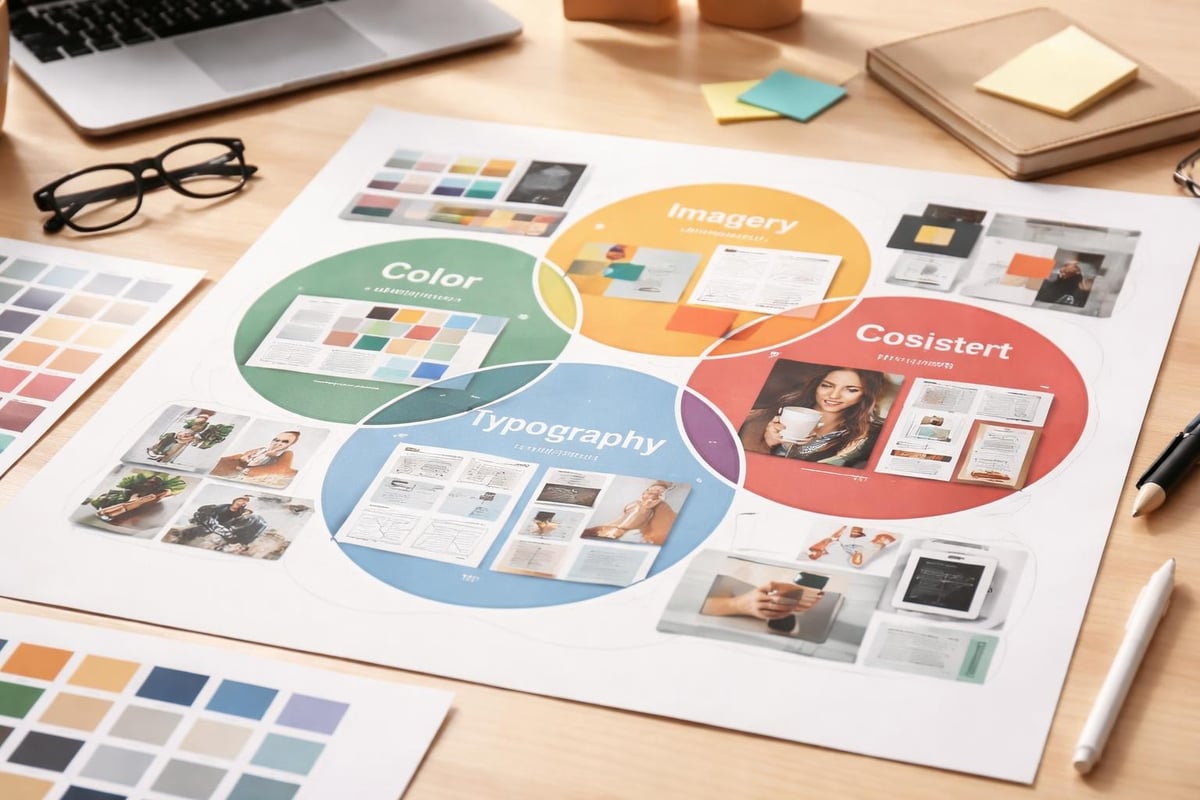
Building an effective marketing aesthetic requires understanding its foundational elements and how they work together:
- Color Psychology: Different hues trigger specific emotional responses and associations
- Typography Selection: Font choices communicate personality, from playful to authoritative
- Imagery Style: Photo treatments, illustration approaches, and visual metaphors
- Spatial Design: How white space and layout guide attention and create breathing room
- Consistency Patterns: Repeated visual elements that build recognition and trust
These components don't exist in isolation. They form a cohesive visual brand language that tells your story across every customer touchpoint, from Instagram posts to email newsletters to website landing pages.
Creating Emotional Connections Through Visual Strategy
The most powerful marketing aesthetic doesn't just look good; it makes people feel something specific. This emotional resonance is what separates forgettable brands from those that inspire loyalty and advocacy. When developing your visual strategy, consider the emotional journey you want customers to experience.
Premium and Luxury Positioning
Brands targeting high-end markets often employ minimalist aesthetics with abundant white space, serif typography, and muted color palettes. This approach signals sophistication, exclusivity, and attention to detail. Think of how luxury fashion houses use sparse layouts and monochromatic schemes to convey refinement.
Approachable and Friendly Positioning
Conversely, brands seeking to appear warm and accessible might choose rounded typography, bright accent colors, and lifestyle photography featuring real people. This aesthetic strategy communicates openness, community, and relatability, perfect for service-based businesses building personal connections.
Innovative and Forward-Thinking Positioning
Tech companies and startups often adopt bold geometric shapes, gradient color schemes, and abstract imagery. This marketing aesthetic signals innovation, progress, and cutting-edge thinking, appealing to early adopters and change-makers.
The key is alignment between your aesthetic choices and your actual brand values. Inconsistency creates confusion and erodes trust. When visual presentation matches brand promise, you build what marketers call "aesthetic coherence," strengthening every interaction.
Practical Implementation Across Marketing Channels
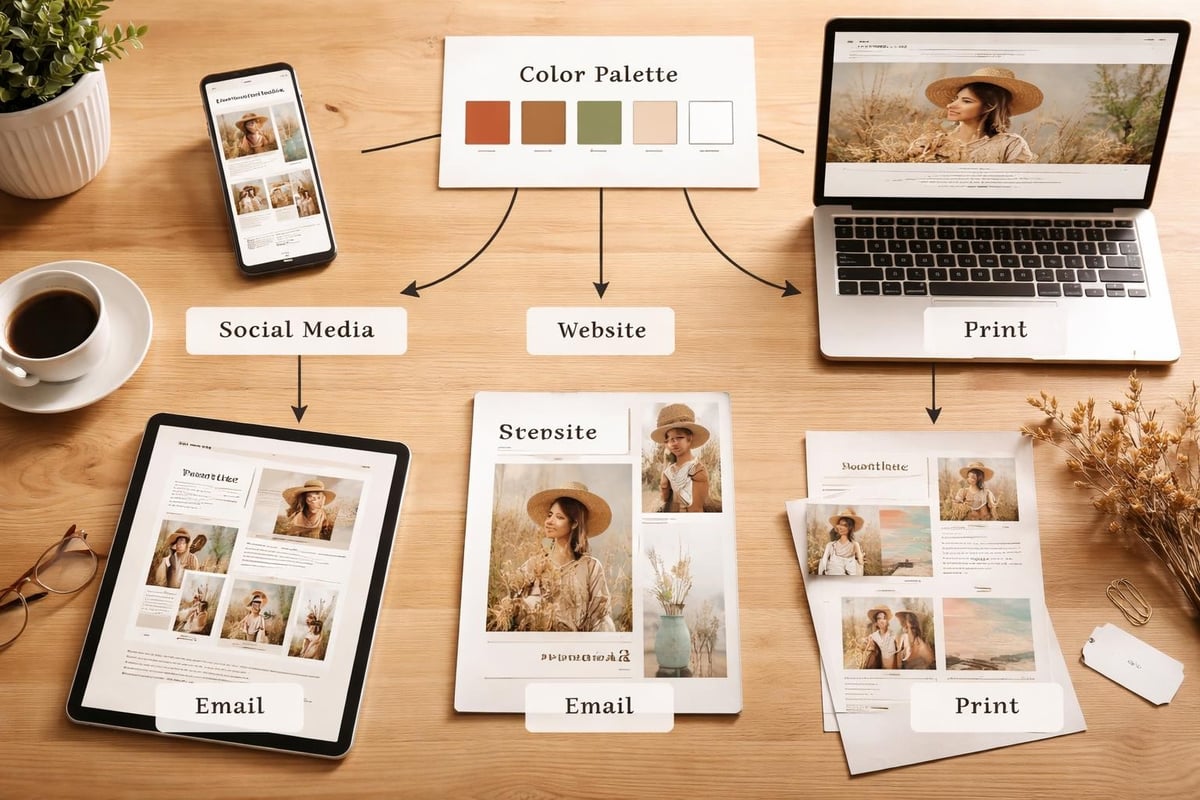
Translating your marketing aesthetic into practical application requires systematic thinking about each customer touchpoint. Your visual identity should remain recognizable while adapting to different platform requirements and contexts.
Social Media Aesthetic Development
Social platforms demand particular attention to aesthetic consistency because they're often the first point of contact with potential customers. Successful social media aesthetics balance variety with cohesion:
- Establish a Content Grid Strategy: Plan how individual posts combine to create an overall visual impression
- Develop Template Systems: Create repeatable formats for different content types (quotes, tips, behind-the-scenes)
- Maintain Color Consistency: Use your brand palette across all imagery, even in photos
- Create Brand Filters: Develop preset photo treatments that give visual unity
- Design Highlight Covers: Ensure Instagram story highlights reflect your overall aesthetic
Research shows that consistent branding across platforms increases revenue by up to 23%, making this systematic approach worthwhile.
Website and Digital Experience
Your website serves as aesthetic headquarters, where all visual elements come together in their fullest expression. Rocket Website GmbH specializes in creating WordPress websites that balance aesthetic appeal with technical performance, recognizing that beautiful design must also load quickly and function flawlessly.
| Aesthetic Element | Website Application | Impact on User Experience |
|---|---|---|
| Color Palette | Backgrounds, CTAs, accents | Guides attention, creates hierarchy |
| Typography | Headers, body text, navigation | Improves readability, sets tone |
| Imagery | Hero images, product photos, icons | Communicates value, builds emotion |
| Layout Grid | Content organization, white space | Reduces cognitive load, improves flow |
| Motion Design | Hover effects, transitions, scrolling | Adds delight, provides feedback |
The physical environment shares principles with digital aesthetics. Understanding atmospherics in retail spaces illuminates how environmental design influences behavior, principles that translate directly to creating immersive digital experiences.
The Role of Trends and Timelessness
Contemporary marketing aesthetic exists in tension between current trends and enduring design principles. The rise of Internet aesthetics has created numerous micro-trends, from cottagecore to dark academia, each with devoted followings and specific visual vocabularies.
Savvy brands navigate this landscape by identifying which trends align with their values and which represent passing fads. A 70/30 approach works well: 70% timeless design principles that provide stability, 30% trend-responsive elements that demonstrate cultural awareness.
Evaluating Trend Relevance
Before incorporating trending aesthetic elements, ask these questions:
- Does this trend resonate with our target audience's current interests?
- Will this aesthetic choice still feel relevant in 12-18 months?
- Does it authentically reflect our brand personality, or are we chasing popularity?
- Can we adapt this trend to our existing visual language without disruption?
The brands that succeed long-term build distinctive aesthetics that feel fresh without being trendy, professional without being sterile, and memorable without being gimmicky.
Measuring Aesthetic Impact on Business Results
Marketing aesthetic might seem subjective, but its impact on business metrics is measurable. Tracking the right indicators helps you understand whether your visual strategy is working.
Key Performance Indicators for Aesthetic Success
- Engagement Rates: Time on page, scroll depth, social interactions
- Brand Recognition: Unaided recall, visual association testing
- Conversion Metrics: Click-through rates, form completions, purchase decisions
- Customer Feedback: Qualitative responses about brand perception
- Competitive Differentiation: How quickly customers identify your content
A/B testing different aesthetic approaches provides concrete data. Try testing two email designs with identical copy but different visual treatments, or create multiple ad variations with the same offer but different imagery styles. The results often reveal surprising insights about what resonates with your specific audience.
Common Aesthetic Pitfalls to Avoid
Even well-intentioned brands make mistakes that undermine their marketing aesthetic:
- Overcomplicated designs that confuse rather than clarify
- Inconsistent application that fragments brand identity
- Following competitors too closely instead of developing distinctive visuals
- Neglecting accessibility by using insufficient color contrast or tiny typography
- Ignoring mobile optimization where most customers now experience brands
- Chasing every trend instead of building lasting visual equity
The most effective marketing aesthetic serves your audience first, your brand second, and your personal preferences last.
Building Your Aesthetic Framework
Developing a comprehensive marketing aesthetic requires both creative vision and strategic discipline. The process involves research, experimentation, documentation, and refinement.
The Strategic Development Process
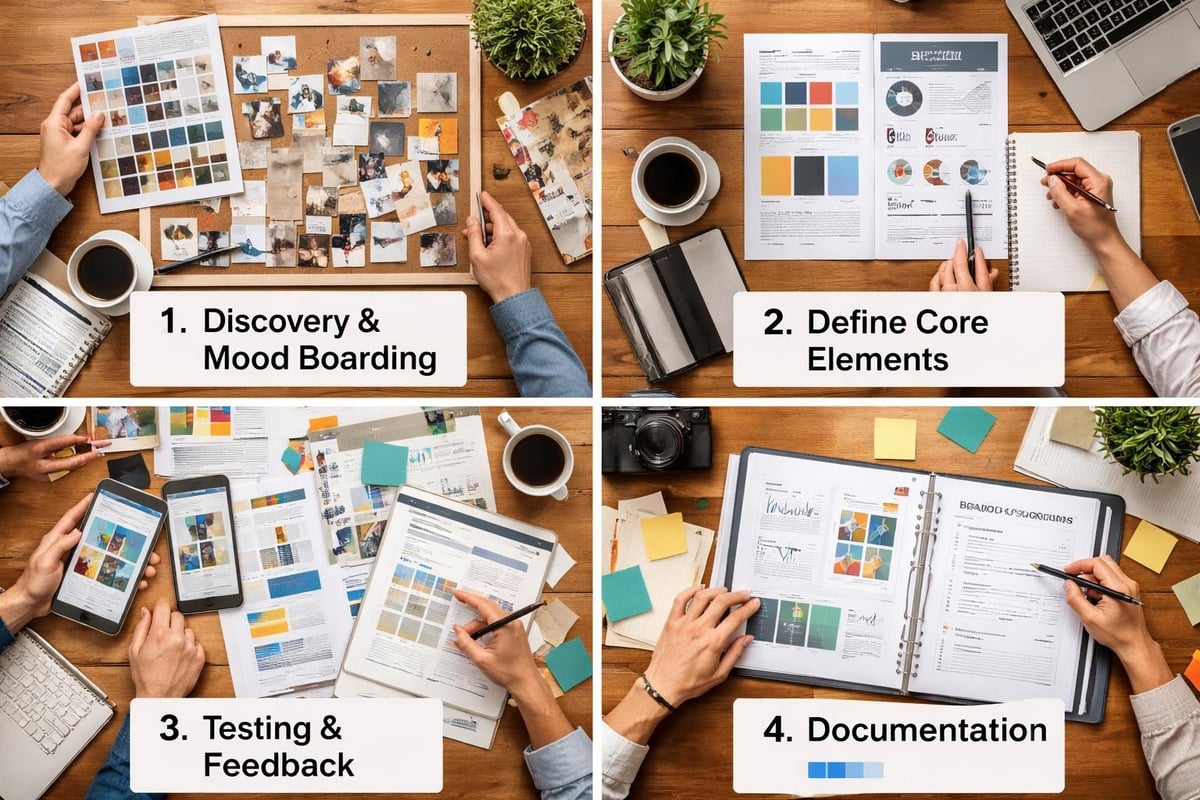
Phase 1: Discovery and Research
Begin by analyzing your target audience's visual preferences, competitive landscape, and brand positioning. Create mood boards that capture emotional qualities you want to evoke. Study brands outside your industry that successfully use aesthetic to build connections.
Phase 2: Core Element Definition
Establish your fundamental visual building blocks:
| Element | Specifications | Usage Guidelines |
|---|---|---|
| Primary Colors | 2-3 main brand colors with hex codes | 60% of design usage |
| Secondary Colors | 3-5 supporting colors | 30% of design usage |
| Accent Colors | 1-2 attention-grabbing colors | 10% for CTAs, highlights |
| Primary Typeface | Font for headlines and emphasis | Headers, short text |
| Secondary Typeface | Font for body text | Long-form content, captions |
| Image Style | Photography treatment guidelines | Filters, composition, subject matter |
Phase 3: Application and Testing
Create templates and examples across all marketing channels. Test these with real audience segments and gather feedback. Refine based on both quantitative performance data and qualitative responses.
Phase 4: Documentation and Training
Compile your decisions into a visual brand guide that anyone creating content can reference. This documentation ensures consistency even as your team grows or you work with external partners.
Cultural and Contextual Considerations
Your marketing aesthetic doesn't exist in a vacuum. Cultural context, platform norms, and audience expectations all influence how visual elements are perceived and interpreted.
Cross-Cultural Aesthetic Awareness
Colors, symbols, and imagery carry different meanings across cultures. Red signals excitement in Western markets but represents luck and prosperity in Asian contexts. Minimalism reads as sophisticated in some cultures and cold or incomplete in others. If your business serves diverse markets, research cultural aesthetic preferences to avoid unintended messages.
Platform-Specific Adaptation
Each marketing channel has aesthetic conventions that shape audience expectations. LinkedIn audiences expect more conservative, professional visuals than TikTok users, who appreciate playful, personality-driven content. Your core aesthetic should flex to meet these contextual needs while maintaining recognizable brand elements.
The concept of visual merchandising originated in retail but applies equally to digital marketing. Just as physical stores arrange products to optimize appeal, digital marketers must present content in visually strategic ways that guide attention and encourage action.
Future-Proofing Your Marketing Aesthetic
As technology evolves and consumer preferences shift, your marketing aesthetic must adapt without losing its essential character. Forward-thinking brands build flexibility into their visual systems from the start.
Emerging Aesthetic Considerations for 2026 and Beyond
- AI-Generated Imagery: How to maintain authenticity while leveraging AI design tools
- Augmented Reality: Designing for mixed digital-physical experiences
- Personalization at Scale: Creating aesthetic variations that feel customized
- Accessibility Standards: Ensuring visuals work for users with different abilities
- Sustainability Messaging: Visual communication of environmental values
The brands that thrive will be those that view their marketing aesthetic as a living system, not a fixed set of rules. Regular audits, audience check-ins, and willingness to evolve keep visual identities fresh and relevant.
Your marketing aesthetic represents your brand's visual promise to customers. When that promise is kept consistently across every touchpoint, from the first Instagram impression to the final checkout page, you build the recognition, trust, and emotional connection that transform casual interest into lasting loyalty.
The strategic development of your marketing aesthetic creates the foundation for meaningful customer relationships and measurable business growth. When visual elements align with brand values and audience preferences, every piece of content works harder to attract, engage, and convert. New Love Marketing & Design specializes in creating cohesive brand aesthetics that blend psychological insights with strategic design, using The M Method framework to help businesses build visual identities that connect emotionally and perform with purpose. Ready to transform your brand's visual presence into a powerful marketing asset?