
In today's competitive digital landscape, businesses need more than just a website to succeed. They need strategic visibility at the exact moment potential customers are searching for solutions. This is where a paid search specialist becomes invaluable. These professionals combine analytical thinking with creative strategy to drive targeted traffic, generate qualified leads, and maximize return on advertising spend. Whether you're considering hiring a paid search expert or pursuing this career path yourself, understanding the role's depth and impact is essential for making informed decisions about your digital marketing investments.
Understanding the Paid Search Specialist Role
A paid search specialist is a digital marketing professional who manages and optimizes pay-per-click advertising campaigns across search engines like Google, Bing, and other platforms. Their primary responsibility extends far beyond simply launching ads. They serve as strategic architects who align advertising efforts with business objectives, ensuring every dollar spent contributes to measurable growth.
The role encompasses multiple dimensions of campaign management. Specialists conduct extensive keyword research to identify the terms and phrases potential customers use when seeking products or services. They craft compelling ad copy that resonates with target audiences while adhering to character limits and platform guidelines. Budget allocation requires constant monitoring and adjustment to ensure optimal distribution across campaigns, ad groups, and individual keywords.
Core Responsibilities and Daily Activities
The day-to-day work of a paid search specialist varies based on account complexity and campaign stages. Morning routines typically begin with performance reviews, checking overnight metrics, and identifying any significant changes or anomalies that require immediate attention.
Campaign management responsibilities include:
- Conducting keyword research and competitive analysis
- Creating and testing ad copy variations
- Setting and adjusting bid strategies
- Monitoring quality scores and ad relevance
- Analyzing conversion data and user behavior
- Preparing performance reports for stakeholders
- Implementing A/B tests across campaign elements
Budget management demands particular attention. Specialists must balance aggressive growth targets with cost efficiency, constantly evaluating which campaigns, keywords, and audiences deliver the strongest return on investment. According to comprehensive job descriptions for paid search specialists, this analytical oversight separates successful practitioners from those who simply maintain campaigns.

Essential Skills for Paid Search Success
Technical proficiency forms the foundation of paid search expertise. Specialists must master multiple advertising platforms, each with unique features, limitations, and best practices. Google Ads remains the dominant platform, but expertise in Microsoft Advertising, Amazon Advertising, and emerging channels increasingly differentiates top performers.
Analytical and Technical Capabilities
Data analysis skills prove critical for interpreting campaign performance and making informed optimization decisions. Specialists regularly work with metrics including click-through rates, conversion rates, cost per acquisition, quality scores, impression share, and return on ad spend. The ability to identify patterns, spot opportunities, and diagnose problems within complex datasets separates competent specialists from exceptional ones.
| Skill Category | Key Competencies | Application |
|---|---|---|
| Platform Expertise | Google Ads, Microsoft Advertising, Analytics tools | Campaign creation and management |
| Data Analysis | Metrics interpretation, trend identification, reporting | Performance optimization |
| Technical Knowledge | Tracking pixels, conversion tags, UTM parameters | Measurement and attribution |
| Strategic Thinking | Audience targeting, budget allocation, competitive positioning | Campaign planning |
Excel proficiency remains surprisingly important despite advanced platform features. Specialists use spreadsheets for bid management, budget forecasting, performance analysis, and client reporting. Pivot tables, VLOOKUP functions, and data visualization become daily tools for transforming raw data into actionable insights.
Creative and Strategic Thinking
While often considered a technical role, paid search demands significant creative ability. Writing compelling ad copy within strict character limits requires understanding customer psychology, pain points, and motivations. The detailed qualifications outlined by industry leaders emphasize this balance between analytical rigor and creative execution.
Successful specialists understand how to craft messages that resonate emotionally while communicating practical benefits. They recognize that ad copy serves as the critical bridge between searcher intent and business offerings. This intersection of psychology and persuasion aligns perfectly with approaches that emphasize emotional connection and strategic purpose in marketing communications.
Effective ad copy requires:
- Clear value proposition articulation
- Alignment with searcher intent
- Compelling calls-to-action
- Differentiation from competitors
- Consistency with landing page messaging
Building a Career as a Paid Search Specialist
Entry into paid search typically follows several pathways. Some professionals begin in broader digital marketing roles before specializing, while others pursue dedicated PPC positions from the start. Educational backgrounds vary widely, from marketing degrees to self-taught practitioners who demonstrate results through certifications and portfolio work.
Educational Foundation and Certifications
While formal education provides valuable marketing fundamentals, practical platform knowledge often matters more to employers. Google Ads certifications demonstrate baseline competency and commitment to professional development. These free certifications cover Search, Display, Video, Shopping, and Measurement, providing comprehensive platform understanding.
The Google Analytics certification complements paid search expertise by strengthening data analysis and attribution capabilities. Understanding how paid traffic behaves on-site, which pages drive conversions, and how different channels interact creates more sophisticated campaign strategies.

Beyond platform-specific certifications, specialists benefit from broader digital marketing education. Understanding SEO helps identify organic opportunities that complement paid efforts. Social media advertising knowledge enables cross-channel strategy development. Conversion rate optimization skills improve landing page performance and overall campaign ROI.
Gaining Practical Experience
Hands-on experience accelerates skill development faster than any certification program. Entry-level specialists should seek opportunities to manage smaller accounts or specific campaign components under supervision. This practical application reveals the gap between theoretical knowledge and real-world execution.
Many professionals build experience through:
- Managing personal or small business campaigns
- Freelancing for local businesses
- Volunteering digital marketing services for nonprofits
- Participating in agency internship programs
- Taking on PPC responsibilities within current marketing roles
The learning curve remains steep initially, as platform complexity and campaign variables create numerous opportunities for mistakes. However, these early errors provide invaluable lessons that textbooks cannot replicate. Successful specialists embrace this learning process, documenting what works, what fails, and why.
Strategic Campaign Development and Management
Creating effective paid search campaigns requires methodical planning before launching a single ad. Strategy development begins with understanding business objectives, target audiences, competitive landscape, and available resources. Without this foundation, even technically perfect campaigns may fail to deliver meaningful business results.
Keyword Research and Selection
Keyword research forms the cornerstone of paid search success. Specialists identify the search terms potential customers use when seeking solutions, evaluating each keyword's search volume, competition level, and commercial intent. This process extends beyond obvious product terms to include question-based queries, problem-focused searches, and comparison terms.
Keyword categorization typically includes:
- Branded terms (company and product names)
- Generic terms (product or service categories)
- Competitor terms (alternative solutions)
- Long-tail keywords (specific, detailed queries)
- Question keywords (how, what, why queries)
Search intent analysis determines which keywords align with different customer journey stages. Informational queries from early-stage researchers require different messaging than transactional searches from ready-to-buy customers. Matching ad content and landing pages to search intent significantly improves conversion rates and quality scores.
Campaign Structure and Organization
Proper campaign architecture enables efficient management and performance optimization. Specialists organize campaigns by product lines, service categories, geographic regions, or other meaningful business segments. This structure facilitates budget allocation, performance analysis, and targeted messaging.
Ad groups within campaigns contain tightly themed keyword sets sharing similar intent. This granular organization allows more relevant ad copy and landing pages, improving quality scores and reducing costs. Well-structured accounts often outperform poorly organized ones even with identical budgets and targeting.
| Campaign Element | Best Practice | Impact |
|---|---|---|
| Campaign Structure | Organize by business objective or product line | Simplified budget management |
| Ad Group Themes | Group keywords by specific intent | Higher quality scores |
| Keyword Match Types | Use mix of exact, phrase, and broad match | Balanced reach and relevance |
| Negative Keywords | Exclude irrelevant searches | Improved efficiency |
Performance Optimization and Testing
Campaign launch marks the beginning of the optimization process, not the end. Continuous testing and refinement separate adequate performance from exceptional results. Paid search specialists develop systematic testing methodologies that isolate variables and measure impact accurately.
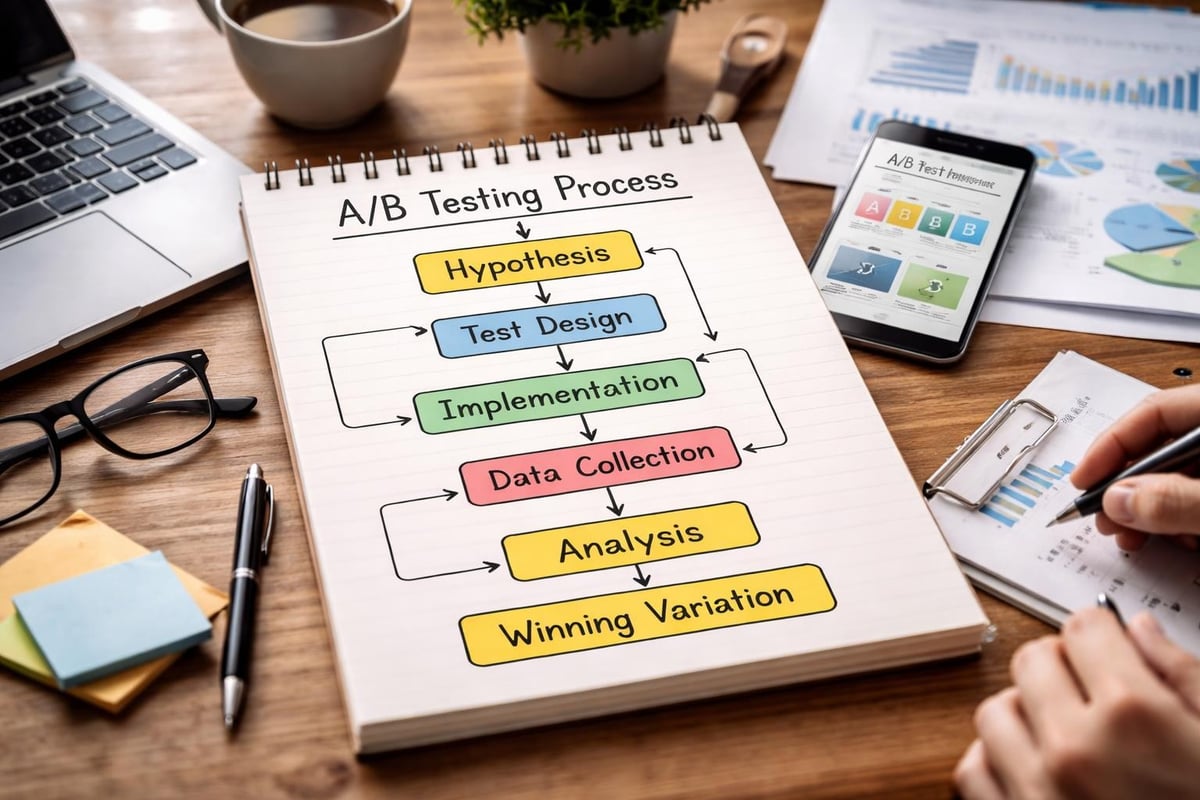
A/B Testing Methodology
Effective testing requires disciplined approach and patience. Specialists identify high-impact elements worth testing, create variations that differ in meaningful ways, and allow sufficient time and data volume for statistical significance. Common testing priorities include ad headlines, descriptions, calls-to-action, landing pages, and bid strategies.
Testing one variable at a time provides clear causation between changes and results. When specialists modify multiple elements simultaneously, determining which change drove performance improvements becomes impossible. This methodical approach may seem slow but produces reliable insights that compound over time.
The responsibilities outlined in professional job listings emphasize this data-driven optimization approach. Specialists who embrace systematic testing consistently deliver superior long-term results compared to those making changes based on intuition alone.
Quality Score Optimization
Quality Score represents Google's assessment of ad relevance, landing page experience, and expected click-through rate. Higher quality scores reduce costs and improve ad positions, making optimization a critical specialist responsibility. Improving these scores requires aligned efforts across keyword selection, ad copy, and landing page content.
Quality Score improvement tactics include:
- Ensuring tight keyword-to-ad-copy alignment
- Creating dedicated landing pages for specific themes
- Improving page load speed and mobile experience
- Using keywords in headlines and descriptions
- Removing low-performing keywords
Reporting and Stakeholder Communication
Translating campaign data into business insights requires communication skills that complement technical expertise. Paid search specialists regularly present performance reports to clients, executives, or internal teams who may lack advertising platform knowledge. Effective reporting focuses on business outcomes rather than vanity metrics.
Metrics That Matter
While platforms provide hundreds of available metrics, successful specialists focus on those tied directly to business objectives. E-commerce campaigns prioritize revenue, return on ad spend, and cost per acquisition. Lead generation campaigns track cost per lead, lead quality scores, and conversion rates. Brand awareness initiatives monitor impression share, click-through rates, and new user percentages.
Context transforms metrics into insights. Reporting a 3% click-through rate means little without comparing it to previous periods, industry benchmarks, or campaign objectives. Specialists provide this context, explaining whether performance meets expectations and identifying opportunities for improvement.
| Metric | Business Meaning | Optimization Focus |
|---|---|---|
| ROAS | Revenue generated per dollar spent | Profitability |
| CPA | Cost to acquire customer | Efficiency |
| Conversion Rate | Percentage of clicks converting | Landing page and targeting |
| Impression Share | Percentage of available impressions captured | Budget and competitiveness |
Industry Trends and Future Outlook
The paid search landscape continues evolving as platforms introduce automation, machine learning, and artificial intelligence capabilities. Smart bidding strategies now handle bid adjustments that once required manual oversight. Responsive search ads automatically test headline and description combinations to identify top performers.
These technological advances change specialist responsibilities rather than eliminating them. While automation handles tactical execution, strategic thinking becomes more valuable. Specialists must define objectives, set appropriate targets, provide quality creative assets, and interpret results within broader business contexts.
Privacy changes and tracking limitations present ongoing challenges. Cookie restrictions, iOS privacy updates, and regulatory changes affect conversion tracking and attribution. Specialists must adapt measurement strategies, embrace first-party data collection, and work within evolving privacy frameworks.
The demand for skilled paid search specialists continues growing as businesses recognize search advertising's importance. Companies across industries compete for professionals who combine technical platform knowledge with strategic business thinking. Those who develop comprehensive skill sets and stay current with platform changes position themselves for long-term career success.
Understanding how paid search integrates with broader marketing efforts becomes increasingly important. Specialists who recognize connections between paid search, organic search, social media, and content marketing deliver more cohesive strategies that amplify overall marketing effectiveness.
Mastering the paid search specialist role requires blending technical expertise, analytical thinking, creative problem-solving, and strategic business acumen. As digital advertising becomes more sophisticated, the value of specialists who can navigate complexity while maintaining focus on business outcomes continues rising. Whether you're building an in-house team or seeking expert partnership, New Love Marketing & Design brings strategic clarity and purposeful execution to paid search campaigns that connect with audiences and drive measurable growth. Their psychology-informed approach through The M Method ensures your advertising investments create both immediate results and lasting brand value.